
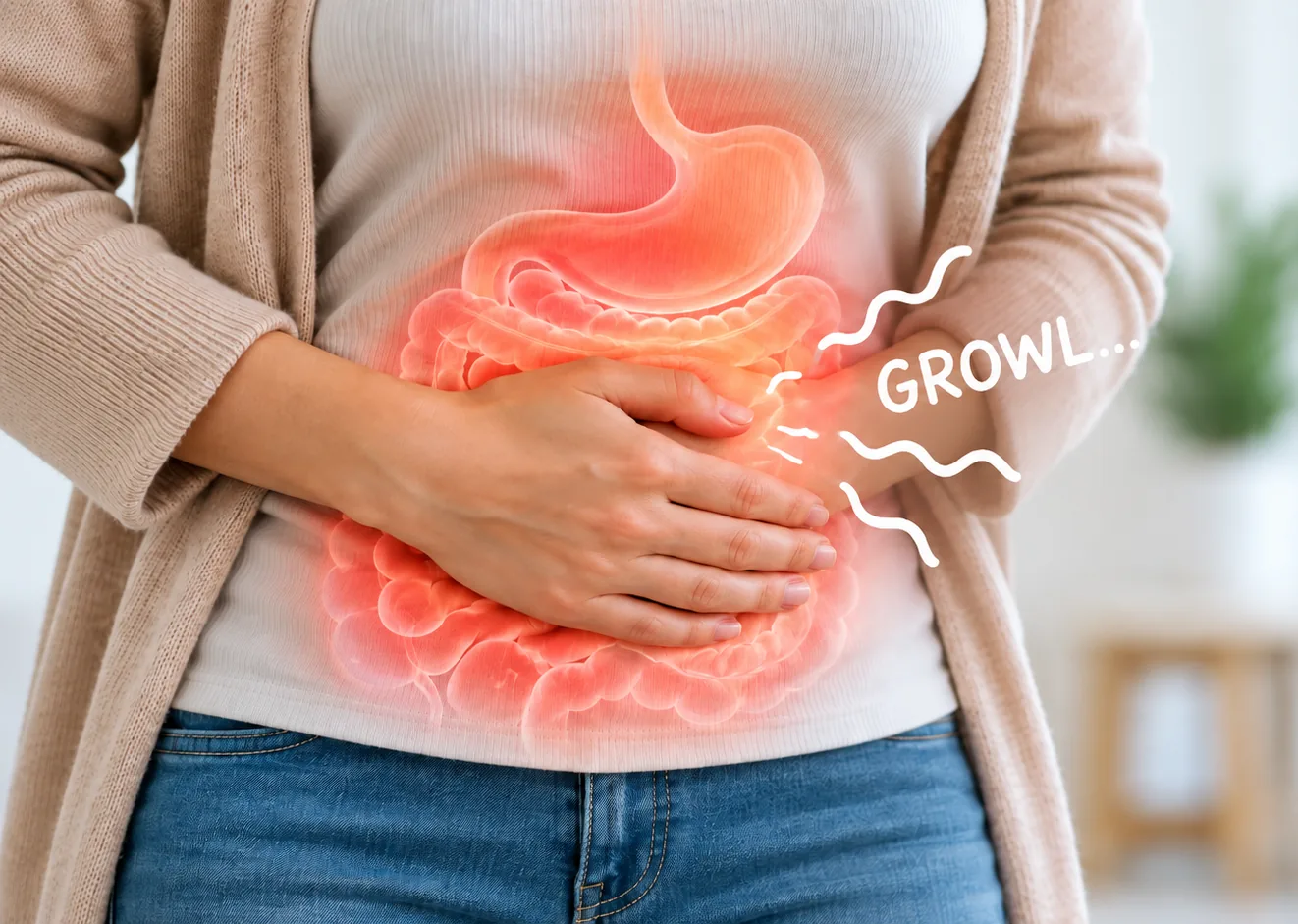
Why Does Your Stomach Growl? It Isn’t Just Hunger
Why does your stomach growl even when you are not hungry? The sound usually comes from contractions moving gas, liquid and food through the stomach and intestines. Hunger can make the noise easier to hear, but digestion, swallowed air and changes in bowel activity can also cause it.
What makes your stomach growl is movement. Occasional rumbling without pain or other symptoms is usually a normal sign that the digestive tract is working.
Why does your stomach growl?
The familiar growl is a bowel sound. The medical term for these noises is borborygmi. Despite the name, they may come from the intestines rather than the stomach. The digestive tract is hollow, so sounds made inside it can echo through the abdomen. MedlinePlus explains that most bowel sounds simply reflect normal intestinal activity.
Muscle waves called peristalsis squeeze and mix the contents of the digestive tract. According to the National Institute of Diabetes and Digestive and Kidney Diseases, these contractions move food and liquid forward while mixing them with digestive juices. Gas and fluid can gurgle as they move through the intestines.
The quick answer
| When it happens | Likely reason | What it usually means |
| On an empty stomach | Fasting contractions move gas and liquid | Usually normal |
| After eating | Peristalsis mixes and moves a meal | Usually normal |
| With gas or bloating | Swallowed air or bacterial fermentation | Look for food or habit triggers |
| With pain, vomiting or ongoing bowel changes | Illness or altered gut movement may be involved | Discuss persistent or severe symptoms with a clinician |
Why hunger makes the sound louder
Between meals, the stomach and small intestine do not become inactive. They switch to a recurring fasting pattern called the migrating motor complex. A review of this process describes bursts of contractions that begin in the stomach or small intestine and travel downward. Eating interrupts the fasting pattern.
Those contractions can sweep remaining liquid, gas and small food particles along the digestive tract. With less food present, the movement may be easier to hear. A growl can accompany hunger, but it does not measure how empty the stomach is or prove that the body urgently needs food.
What causes stomach growling when you are not hungry
Understanding what causes your stomach to growl starts with normal digestion. Sounds can increase whenever the gut moves more air, fluid or food than usual. Common triggers include:
- Eating a meal, which activates contractions that mix food with digestive juices and move it onward.
- Swallowing extra air while eating quickly, chewing gum, smoking or drinking carbonated beverages.
- Gas produced when bacteria in the large intestine break down carbohydrates that were not fully digested. This bacterial fermentation also produces some of the compounds that help explain why poop smells.
- Faster intestinal activity during diarrhea, or changes in movement and sensation associated with a digestive condition.
The NIDDK guide to intestinal gas notes that swallowed air and bacterial fermentation are normal sources of gas. Lactose intolerance, other carbohydrate intolerances and irritable bowel syndrome can make gas or related symptoms more noticeable, but noise alone cannot identify the cause.
Why does your stomach growl after eating
A meal gives the digestive tract more material to mix and move. Stomach muscles churn food with digestive juices, while the small intestine continues the mixing and pushes the contents forward. Air swallowed during the meal and gas already in the gut can add bubbling or rumbling sounds.
MedlinePlus notes that increased bowel sounds can occur after eating. If the noise settles and is not accompanied by pain, persistent bloating or bowel changes, it usually reflects normal digestion rather than a problem.
How to make stomach growling quieter
If the sounds are harmless but distracting, a few changes may reduce them:
- Eat at regular times if long gaps between meals reliably trigger the noise.
- Eat and drink more slowly to swallow less air, and reduce gum or carbonated drinks if they increase gas.
- Keep a short food and symptom record if certain meals repeatedly cause rumbling, bloating or diarrhea.
- Avoid cutting out large food groups for noise alone. Discuss recurring symptoms with a clinician or dietitian first.
When stomach growling needs medical advice
Frequent sounds can still be normal. What matters more is whether they are new, persistent or accompanied by other symptoms. Contact a health professional if the growling occurs with:
- Persistent or worsening abdominal pain or swelling.
- Repeated vomiting or diarrhea or constipation that continues.
- Blood from the rectum, black stools or unexplained weight loss.
- A sudden major change in bowel habits or symptoms that interfere with daily life.
Very high-pitched, markedly reduced or absent bowel sounds can occur with serious intestinal problems, but these findings are assessed together with symptoms and a physical examination. Do not try to diagnose an obstruction from sound alone. MedlinePlus advises medical follow-up when abnormal sounds occur with vomiting, bleeding or continuing diarrhea or constipation. The NIDDK overview of IBS also emphasizes that IBS involves abdominal pain and changes in bowel movements, not noise alone.
Frequently asked questions
Why do stomachs growl when they are not hungry?
The gut keeps moving between meals and after food has left the stomach. Peristalsis, fasting contractions, swallowed air and gas can all make sounds without hunger.
Why do tummies growl so loudly?
The stomach and intestines are hollow, so movement inside them can echo. A strong contraction moving a pocket of gas or liquid may produce a loud sound even when nothing is wrong.
Why does my stomach growl all the time?
Some digestive tracts are naturally noisier. Frequent rumbling can follow fast eating, fizzy drinks, gas‑producing foods, diarrhea, or altered gut movement. If it’s new or comes with pain, vomiting, weight loss, or lasting bowel changes, seek medical advice.
Can stress make your stomach growl?
Stress can disrupt brain–gut signals, changing movement or making normal sensations feel stronger. If growling comes with pain or bowel changes, don’t assume stress — get medical advice.
Does stomach growling mean food poisoning?
No. Noise alone doesn’t show contamination. Sounds may increase with diarrhea, but foodborne illness usually causes diarrhea, cramps, nausea, or vomiting together. The guide to fried rice syndrome explains how poor time and temperature control can cause illness even when food looks normal.
The verdict
Why does your stomach growl? Most often, muscle contractions are moving gas, liquid and food through a hollow digestive tract. Hunger can make those sounds more noticeable, but rumbling also occurs during normal digestion. The sound alone is rarely concerning; persistent noise with pain, vomiting, bleeding, weight loss or ongoing bowel changes should be checked.
References
- National Institute of Diabetes and Digestive and Kidney Diseases. Your Digestive System and How It Works. https://www.niddk.nih.gov/health-information/digestive-diseases/digestive-system-how-it-works
- MedlinePlus Medical Encyclopedia. Abdominal Sounds. https://medlineplus.gov/ency/article/003137.htm
- Deloose E, Janssen P, Depoortere I, Tack J. The Migrating Motor Complex. Nature Reviews Gastroenterology and Hepatology. 2012. https://pubmed.ncbi.nlm.nih.gov/22450306/
- National Institute of Diabetes and Digestive and Kidney Diseases. Symptoms and Causes of Gas in the Digestive Tract. https://www.niddk.nih.gov/health-information/digestive-diseases/gas-digestive-tract/symptoms-causes
- National Institute of Diabetes and Digestive and Kidney Diseases. Symptoms and Causes of Irritable Bowel Syndrome. https://www.niddk.nih.gov/health-information/digestive-diseases/irritable-bowel-syndrome/symptoms-causes