Colon Hydrotherapy: What Really Happens During a Colon Cleanse?
Colon hydrotherapy flushes water into the large intestine to remove stool. Often advertised as a way to clear out toxins, ease bloating, or improve gut health, it can make the idea of a thorough internal clean sound appealing.
But removing stool and improving health are different things. Research has not established a benefit from routine colon cleansing, and the procedure carries risks. Understanding what the water actually does helps separate the physical process from the promises around it.
What is colon hydrotherapy?
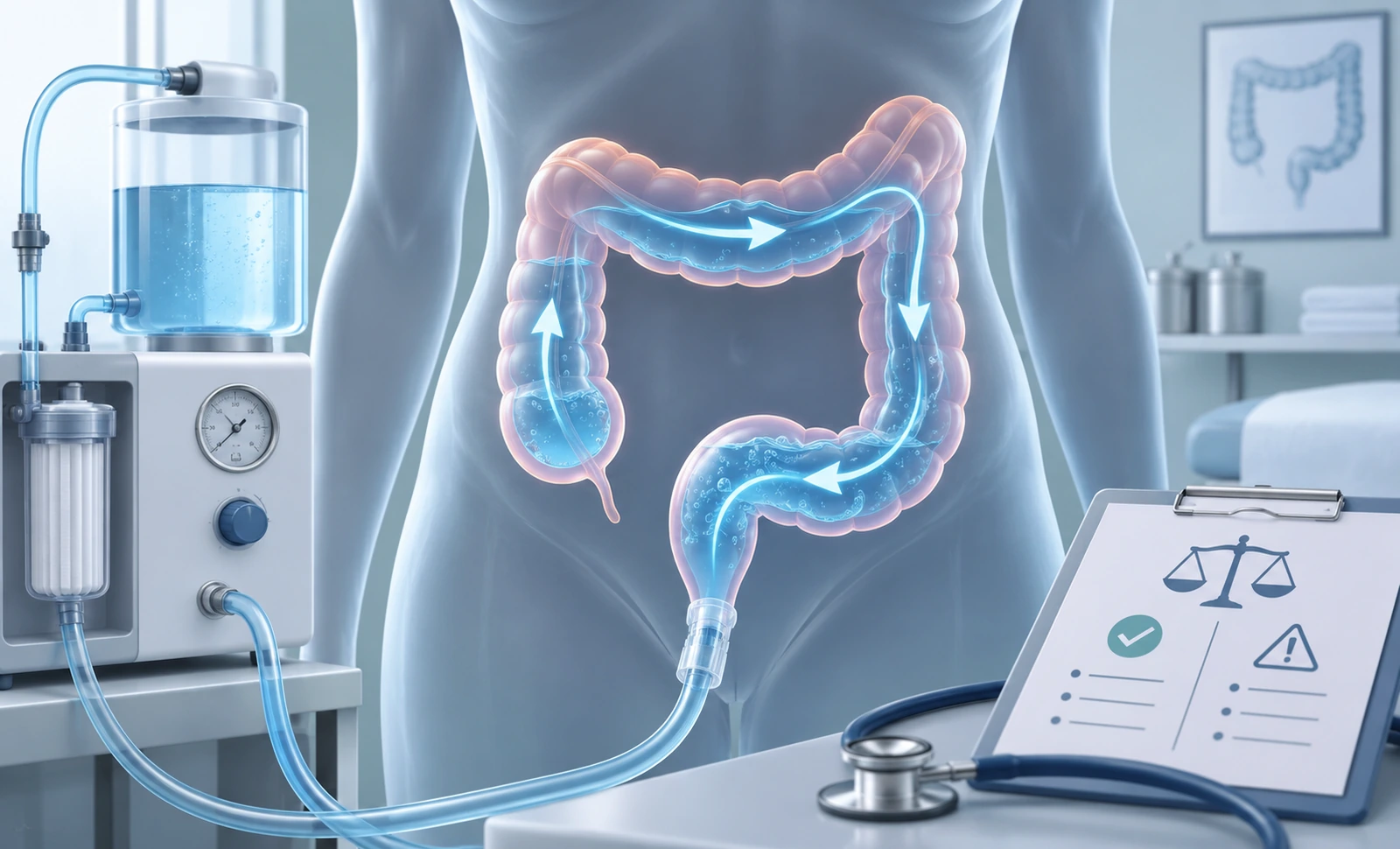
Colon hydrotherapy, also called colonic irrigation or a colonic, involves introducing water through a tube placed in the rectum. Water enters the colon and is then released with stool. A government health information sheet describes the use of filtered, temperature-regulated water through a rectal catheter.
It is one form of colon cleansing. The broader term also covers laxatives, enemas, and products sold as digestive detoxes, which work in different ways.
An enema generally introduces a smaller amount of fluid into the lower bowel. Colonic irrigation uses repeated inflow and outflow, aiming to reach farther into the colon. A review in the International Journal of Clinical Practice describes this distinction. Neither procedure becomes necessary simply because stool is present.
What happens during a colon hydrotherapy procedure
The basic process is mechanical: water enters through the rectal tube, mixes with bowel contents, and drains away with waste. Filling and emptying may be repeated. Equipment and techniques vary, and some providers add herbal preparations to the water.
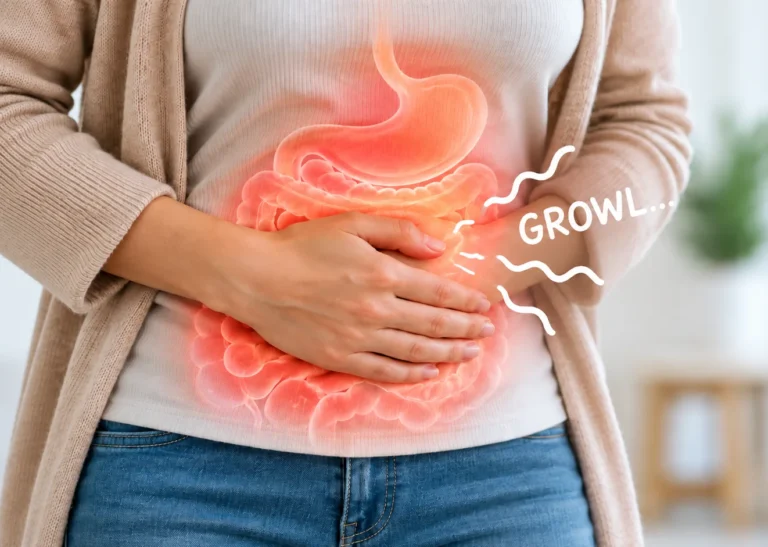
Pressure, cramping, or an urge to pass stool can occur as the bowel fills. Those sensations reflect what is happening in the intestine; they do not show that toxins are being released. Seeing material leave the body confirms that bowel contents have been removed, but says nothing about a wider detox effect.
Does the colon need cleaning?
The colon is already part of the body’s waste-removal system. After most nutrients have been absorbed in the small intestine, the remaining material enters the large intestine. The NIDDK explains that the large intestine absorbs water, while muscular contractions move waste toward the rectum to be passed as stool.
Having stool in the colon is therefore normal. Constipation can interfere with its movement or passage, but that calls for attention to the cause rather than assuming the bowel needs routine washing.
The smell of stool is not evidence that toxins have accumulated either. Much of it comes from chemicals produced by gut bacteria, as explained in why poop smells. An unpleasant odor alone does not establish a need for a cleanse.
What does research say about colon hydrotherapy benefits
Claims about better energy, clearer skin, stronger immunity, or improved overall health go beyond removing stool. They need studies showing that people actually experience those benefits because of the treatment.
A systematic review in the American Journal of Gastroenterology found no methodologically rigorous controlled trials supporting colon cleansing for general health promotion. It also identified reports of harm. Although that review was published in 2009, current NCCIH guidance continues to describe the clinical evidence for colonic irrigation as limited and insufficient to support its claimed uses.
Passing stool may temporarily relieve a feeling of fullness. That does not demonstrate lasting treatment of constipation or explain why it developed. Likewise, any immediate weight change from losing bowel contents or fluid should not be interpreted as body-fat loss.
Is colon hydrotherapy safe?
Colon hydrotherapy side effects can include cramping, nausea, diarrhea, and irritation. More serious complications reported in the medical literature include infection, electrolyte disturbances, and bowel perforation, meaning a hole in the bowel wall. Published reports establish that these complications can occur, but do not reliably tell us how often.
The NCCIH identifies greater potential for harm in people with gastrointestinal disease, previous colon surgery, severe hemorrhoids, kidney disease, or heart disease. Using filtered water or disposable equipment does not address every risk, including injury and disturbances in fluid balance.
How it differs from colonoscopy prep
Doctors do sometimes need an empty bowel. Before a colonoscopy, a prescribed preparation removes stool so the camera can examine the lining clearly. The NIDDK describes colonoscopy prep as a specific diet and laxative regimen directed by the healthcare team. A wellness colonic should not replace those instructions.
Specialist-supervised bowel irrigation may also be used for selected bowel disorders. That medical use is different from offering routine cleansing to otherwise healthy people for general wellness.
What to do instead if constipation is the problem
For ordinary constipation, NIDDK guidance starts with enough dietary fiber, fluids, physical activity, and allowing time for bowel movements. Persistent symptoms may need medication or assessment for problems such as slow bowel movement or difficulty coordinating the pelvic floor muscles.
Seek medical advice promptly for constipation with blood in stool, constant abdominal pain, vomiting, fever, or inability to pass gas. Severe pain, bleeding, fever, or faintness after a colonic also needs urgent assessment. These symptoms need evaluation rather than another cleanse.
References
- Victorian Department of Human Services. Colonic irrigation client health information. https://www.corangamite.vic.gov.au/files/assets/public/v/1/documents/environmental-health/colonic_irrigation_client_health_information.pdf
- Ernst E. Colonic irrigation: therapeutic claims by professional organisations, a review. International Journal of Clinical Practice. 2010;64(4):429–431. https://doi.org/10.1111/j.1742-1241.2009.02166.x
- Acosta RD, Cash BD. Clinical effects of colonic cleansing for general health promotion: a systematic review. American Journal of Gastroenterology. 2009;104(11):2830–2836. https://pubmed.ncbi.nlm.nih.gov/19724266/
- NCCIH. Detoxes and Cleanses: What You Need To Know. https://www.nccih.nih.gov/health/detoxes-and-cleanses-what-you-need-to-know
- NIDDK. Your Digestive System and How It Works. https://www.niddk.nih.gov/health-information/digestive-diseases/digestive-system-how-it-works
- NIDDK. Colonoscopy. https://www.niddk.nih.gov/health-information/diagnostic-tests/colonoscopy
- NIDDK. Treatment for Constipation. https://www.niddk.nih.gov/health-information/digestive-diseases/constipation/treatment
- NIDDK. Symptoms and Causes of Constipation. https://www.niddk.nih.gov/health-information/digestive-diseases/constipation/symptoms-causes