Fried Rice Syndrome: Is Reheating Rice Dangerous?
Fried rice syndrome is a type of food poisoning that can bring on vomiting or diarrhea within hours. Most cases are unpleasant but short-lived, clearing within about a day.
Despite the name, fried rice syndrome is not limited to fried rice — or even rice. The culprit is Bacillus cereus, a bacterium whose spores are often already on raw grains and survive cooking. If food is left warm for too long, the bacteria can multiply and produce a toxin that reheating cannot destroy.
The good news is that prevention is simple. Cool cooked food quickly, keep it cold, and reheat it thoroughly.
What is fried rice syndrome?
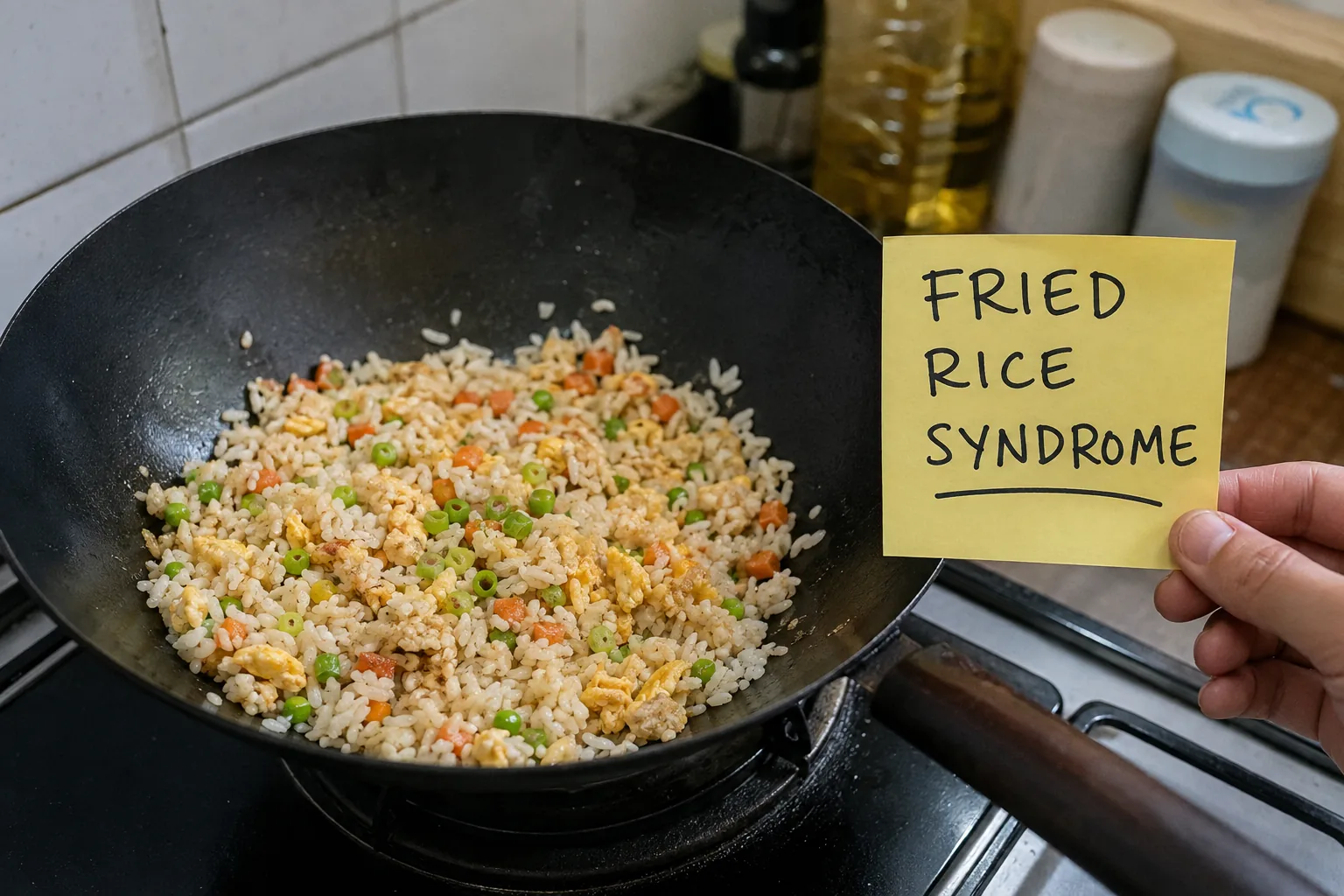
“Fried rice syndrome” is not a clinical diagnosis. It is a common name for food poisoning caused by Bacillus cereus, usually after cooked food is left too long before refrigeration.
The name comes from a pattern investigators noticed decades ago: fried rice is often made with rice cooked earlier and held at room temperature before frying, which can give Bacillus cereus time to grow. In US outbreak data from 1998 to 2008, half of Bacillus cereus outbreaks with an identified food involved rice dishes, and 68% of those were fried rice.
So the dish gave the syndrome its name, but the problem is not limited to rice. Other outbreaks have involved starchy foods such as pasta, beans, and porridge, as well as foods like coleslaw.
The bacterium behind fried rice syndrome: Bacillus cereus
Bacillus cereus lives in soil, which means it turns up routinely on crops, including rice. What makes it a food-safety problem is not the bacterium itself but its spores.
A spore is a dormant, armored survival form produced by some bacteria — and Bacillus cereus spores are heat-resistant enough to survive normal cooking. Heating kills many active bacteria, but the spores can remain intact and later germinate as the food cools, allowing Bacillus cereus to multiply again.
Whether this happens depends largely on time and temperature . Bacillus cereus can grow from roughly 39°F to 118°F (4°C to 48°C), with its sweet spot around 82°F to 95°F (28°C to 35°C). That means a warm kitchen counter can be close to ideal.
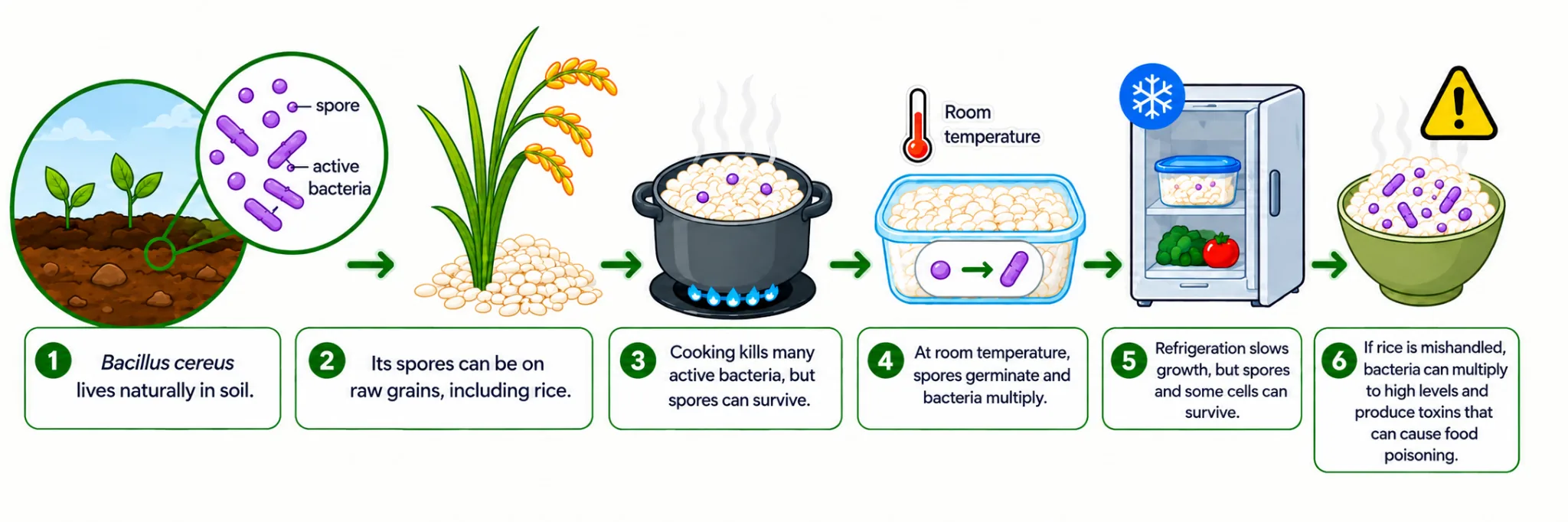
Illness is typically associated with concentrations of 100,000 or more bacterial cells per gram of food. Rice left warm can reach that level within hours, while properly refrigerated rice is far less likely to cause foodborne illness.
Fried rice syndrome symptoms: what it actually looks like
Bacillus cereus can cause fried rice syndrome in two ways, depending on where the toxin is produced. This difference also explains why reheating rice helps in one case but not the other.
- Vomiting type: Bacillus cereus produces cereulide, a toxin that forms in the food before it is eaten. Reheating cannot reliably destroy it.
- Diarrheal type: Live Bacillus cereus reaches the intestine and produces toxins there. Reheating can reduce this risk by killing the bacteria.

Both forms usually clear within about 24 hours. There is no specific treatment, and antibiotics do not help toxin-driven illness, so care mainly means fluids and rest while it passes. Medical attention is warranted if symptoms last beyond a day, if fluids won’t stay down, or if the sick person is very young, elderly, pregnant, or immunocompromised.
Many people who get it never learn what caused it, since a one-day stomach upset rarely leads to a doctor’s visit, let alone a stool culture.
How dangerous is fried rice syndrome, really?
A lot of people ask whether fried rice syndrome can kill you. The short answer is yes, but deaths are extremely rare.
CDC estimates about 63,400 US cases of Bacillus cereus food poisoning each year, with only around 20 hospitalizations. Because most cases are never diagnosed, these figures are estimates rather than counts of confirmed illnesses.
The rare fatal cases involved extreme food mishandling:
- One viral case involved a 20-year-old Belgian student who died after eating spaghetti left at room temperature for five days.
- Another involved a seven-year-old girl whose family ate pasta salad stored for several days in a refrigerator that was far too warm.
Both cases involved pasta, not rice, and days of unsafe storage. That kind of prolonged mishandling can allow very high levels of cereulide to build up, which helps explain why fatal fried rice syndrome is exceptionally rare.
Why reheating rice isn’t really the problem
The common question — “is reheating rice dangerous?” — focuses on the wrong step. The bigger risk is how long cooked rice sits at room temperature before it is chilled. That is when Bacillus cereus can multiply and produce cereulide.
Reheating can kill live bacteria and heat-sensitive toxins, but it cannot destroy cereulide once it has formed. So rice left out for hours is not made safe simply by heating it again.
This is also why rice should only be reheated once. Each cool-and-reheat cycle gives bacteria another chance to grow.
How to store cooked rice (and reheat it) safely
Preventing fried rice syndrome mostly comes down to cooling rice quickly, keeping it cold, and reheating it properly. Food-safety recommendations vary slightly by country, but the basic steps are similar:
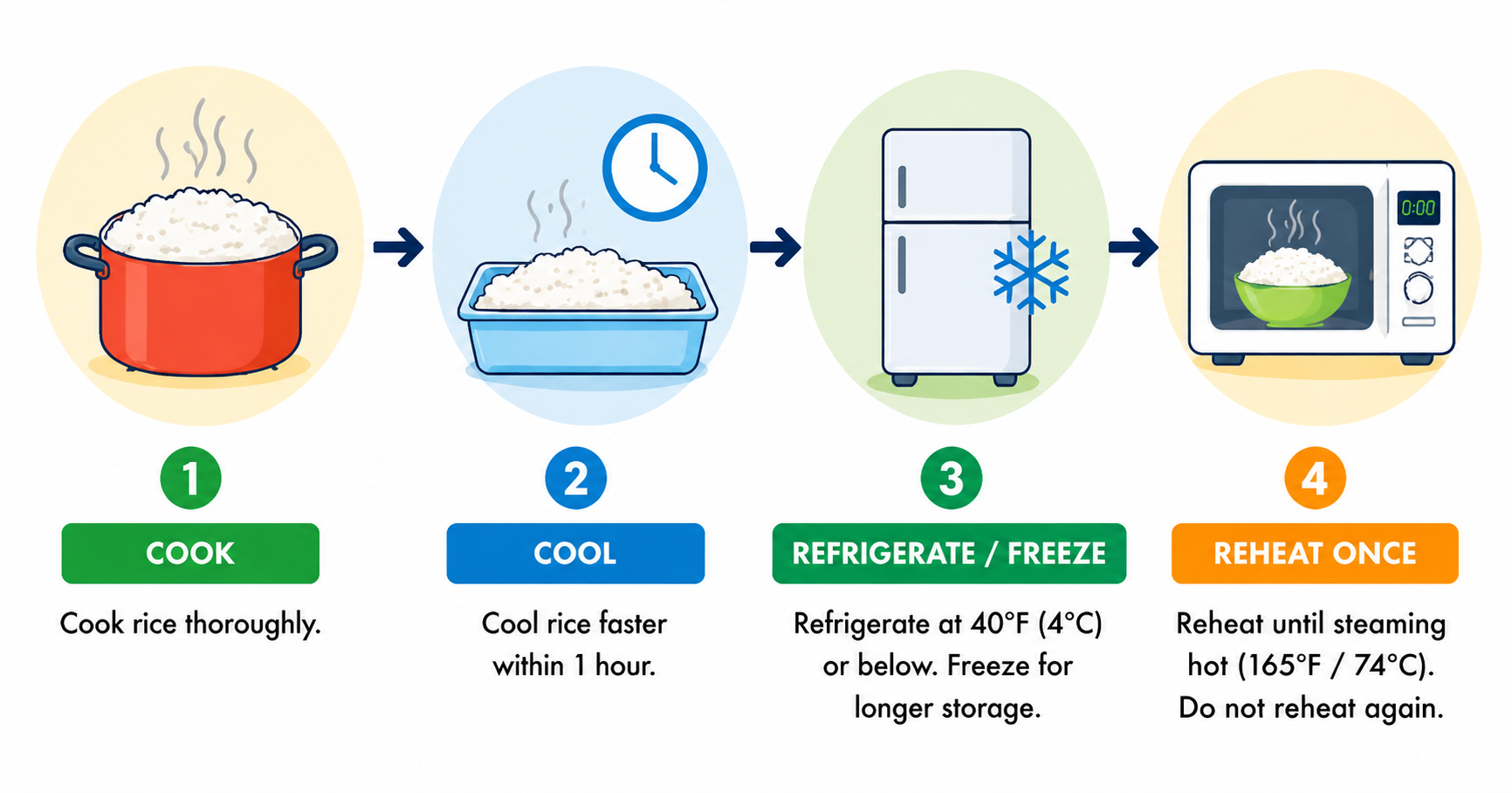
A few details matter:
- Use refrigerated rice within 24 hours.
- Stir microwaved rice partway through to avoid cold spots.
- If you do not know how the rice was stored, skip it. Reheating cannot make badly stored rice safe.
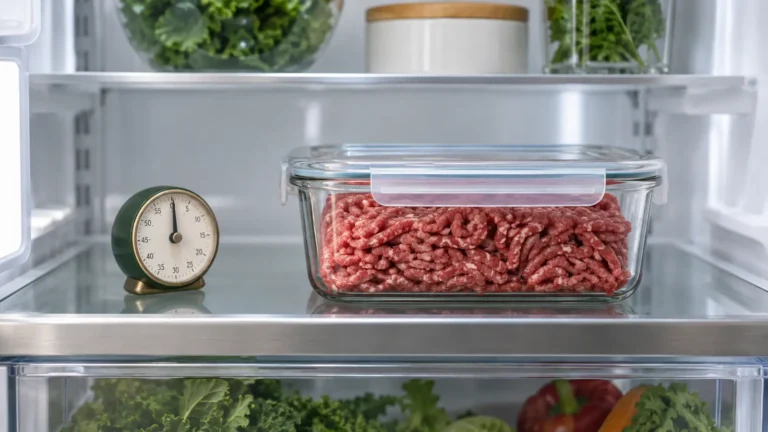
Storage windows vary by food. Raw ground beef, for example, should be cooked or frozen within 1 to 2 days in the fridge.
Frozen rice: does freezing change the risk?
Freezing is a good way to keep rice longer, but it only pauses bacterial growth. It does not reliably kill Bacillus cereus spores or destroy cereulide that formed before freezing. In other words, frozen rice is only as safe as it was when it went into the freezer.
Cool rice within an hour of cooking, divide it into sealed containers or bags, and freeze it. At 0°F (–18°C), frozen food remains safe indefinitely, although the USDA recommends using leftovers within about 3 to 4 months for best quality.
Reheat rice straight from frozen or thaw it in the refrigerator first, then heat to 165°F (74°C) or until steaming hot throughout. Do not leave frozen rice at room temperature to thaw or warm up. Eat it right away, and do not refreeze rice after reheating.
A separate note on cold rice and blood sugar.
You may have seen claims that cooling rice makes it “healthier.” There is some truth to that, because as cooked rice cools, part of its starch changes into resistant starch, which is harder for the body to digest.
That change may slightly affect blood sugar. In one small trial, 15 healthy adults ate both freshly cooked rice and rice that had been refrigerated for 24 hours and then reheated. The cooled-and-reheated rice contained about 2.5 times more resistant starch and produced a significantly lower blood-glucose response.
The effect was modest, however, and it has nothing to do with food safety. The main reason to chill rice is still to keep it safe; any possible blood-sugar benefit is simply an added bonus.
Fried rice syndrome FAQ
Can reheating rice kill you?
It is extremely unlikely. The rare fatal cases of Bacillus cereus food poisoning involved food stored unsafely for several days. For most people, illness is mild and clears within about 24 hours.
How common is fried rice syndrome?
It is probably more common than reported. Estimates suggest about 63,400 Bacillus cereus illnesses occur in the US each year, but many mild cases are never diagnosed.
What is Bacillus cereus, in one sentence?
A spore-forming soil bacterium, common on rice and other crops, whose spores can survive cooking and grow if cooked food is left warm for too long.
Is it safe to eat cold cooked rice?
Yes, as long as it was cooled quickly after cooking and kept refrigerated. The FSA recommends eating refrigerated rice within 24 hours. Rice left sitting at room temperature for too long can be unsafe whether eaten cold or reheated.
How to tell if you have food poisoning?
Common signs include nausea, vomiting, diarrhea, stomach cramps, and sometimes fever. With Bacillus cereus, symptoms often begin within a few hours and usually clear within a day.
Is there a treatment for Bacillus cereus food poisoning?
There is usually no specific treatment. Most cases clear within 24 hours, with fluids and rest being the main care. Seek medical attention if symptoms persist or keeping fluids down becomes difficult.
Does Bacillus cereus cause hepatitis?
No. Viral hepatitis is caused by hepatitis viruses, not by this bacterium. The confusion likely comes from rare severe cases in which cereulide damages the liver and can cause liver failure.
The verdict
The evidence behind fried rice syndrome is fairly clear. Bacillus cereus spores can survive cooking, and if cooked food is left warm for too long, the bacteria can grow and produce a heat-resistant toxin that reheating cannot remove. Most cases are brief and mild, while the rare deaths on record involved pasta stored unsafely for several days.
What remains uncertain is how common the illness really is, since many people recover within a day and are never tested. The prevention, however, is simple: cool rice within an hour, refrigerate it for no more than a day or freeze it, and reheat it once until steaming hot throughout.
This article describes population-level evidence and general food-safety guidance; it is not individual medical advice.
References
1. Food Standards Agency (UK). Home food fact checker — rice storage and reheating guidance. https://www.food.gov.uk/safety-hygiene/home-food-fact-checker
2. Schneider KR, et al. Preventing Foodborne Illness: Bacillus cereus. University of Florida IFAS Extension, FSHN15-06/FS269. https://ask.ifas.ufl.edu/publication/FS269
3. Bennett SD, Walsh KA, Gould LH. Foodborne disease outbreaks caused by Bacillus cereus, Clostridium perfringens, and Staphylococcus aureus — United States, 1998–2008. Clinical Infectious Diseases. 2013;57(3):425–433. CDC Stacks: https://stacks.cdc.gov/view/cdc/160354
4. US FDA. BAM Chapter: Quantitative Analysis for Cereulide in Food Products. https://www.fda.gov/food/laboratory-methods-food/bam-quantitative-analysis-cereulide-food-products
5. Naranjo M, Denayer S, Botteldoorn N, et al. Sudden death of a young adult associated with Bacillus cereus food poisoning. Journal of Clinical Microbiology. 2011;49(12):4379–4381. doi:10.1128/JCM.05129-11. https://journals.asm.org/doi/10.1128/jcm.05129-11
6. Dierick K, Van Coillie E, Swiecicka I, et al. Fatal family outbreak of Bacillus cereus-associated food poisoning. Journal of Clinical Microbiology. 2005;43(8):4277–4279. doi:10.1128/JCM.43.8.4277-4279.2005. https://journals.asm.org/doi/10.1128/jcm.43.8.4277-4279.2005
7. USDA Food Safety and Inspection Service. Leftovers and Food Safety. https://www.fsis.usda.gov/food-safety/safe-food-handling-and-preparation/food-safety-basics/leftovers-and-food-safety
8. FoodSafety.gov. Safe Minimum Internal Temperatures. https://www.foodsafety.gov/food-safety-charts/safe-minimum-internal-temperatures
9. Woh PY, Ng C. Bacillus cereus in rice: a review on food poisoning, antimicrobial resistance, and control measures. Tropical Biomedicine. 2024;41(3):298–309. https://msptm.org/files/Vol41No3/tb-41-3-010-Woh-P-Y.pdf
10. Sonia S, Witjaksono F, Ridwan R. Effect of cooling of cooked white rice on resistant starch content and glycemic response. Asia Pacific Journal of Clinical Nutrition. 2015;24(4):620–625. doi:10.6133/apjcn.2015.24.4.13