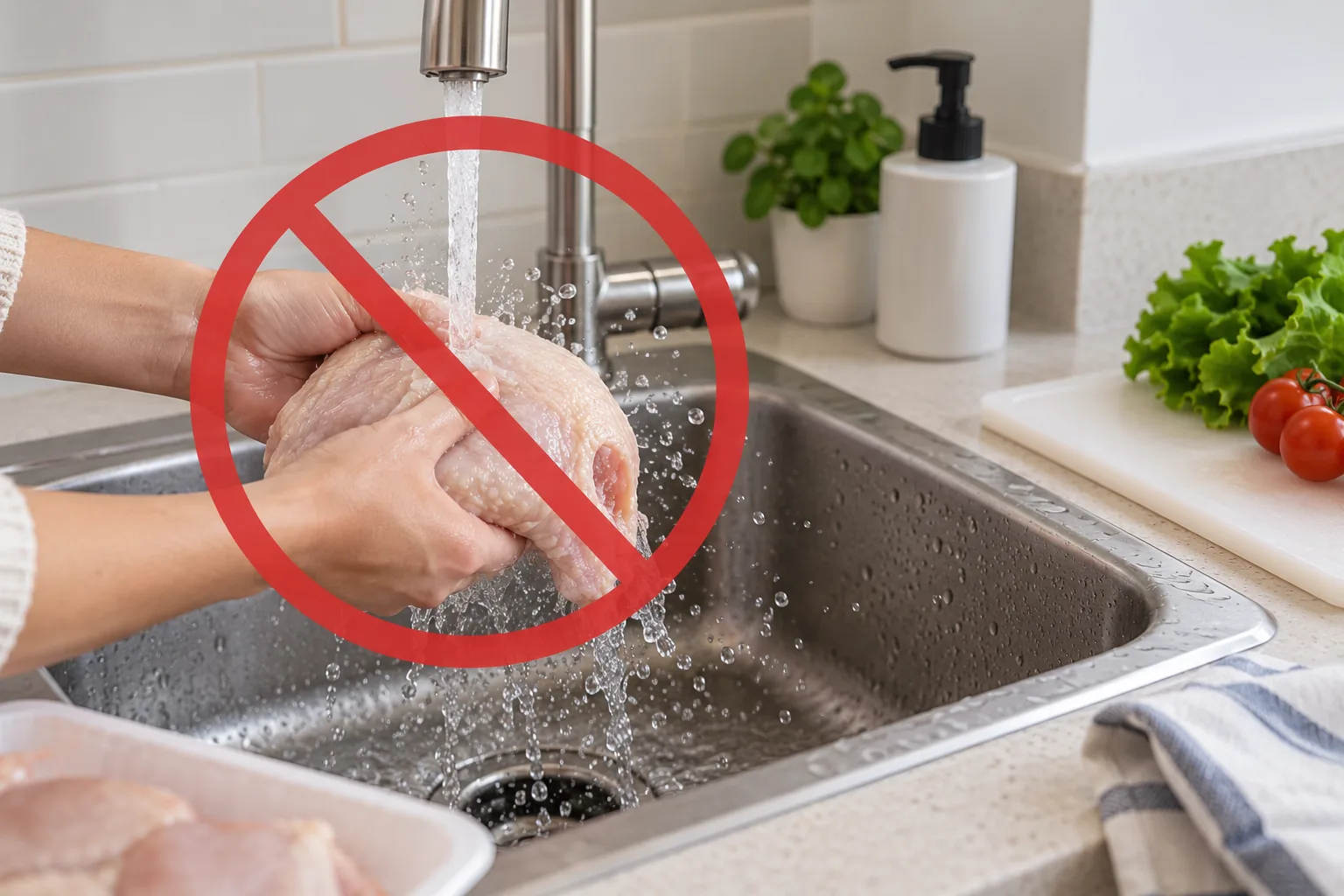
Should You Wash Raw Chicken Before Cooking?
If you grew up washing raw chicken in the sink, putting it straight into a pan can feel like skipping a hygiene step. But should you wash raw chicken before cooking? From a food-safety standpoint, washing raw chicken does more harm than good.
Raw chicken can carry bacteria like Salmonella and Campylobacter. These organisms are easily dislodged by running water, which means rinsing gives them another path out of the package — into the sink, onto hands and utensils, across countertops, and even onto ready-to-eat foods.
That is why the CDC, the USDA, and the UK’s Food Standards Agency all give the same advice: raw chicken is ready to cook, without a rinse. Studies of real-world food preparation support this recommendation by showing how easily rinsing can spread bacteria around the sink and nearby surfaces.
Should you wash raw chicken?
If the question is are you supposed to wash raw chicken before cooking, current guidance is clear: skip the rinse and concentrate on preventing cross-contamination and cooking the chicken properly.
Raw chicken can carry harmful bacteria from the animal or from processing and handling before it reaches the kitchen. Because the meat is raw, those bacteria may still be present when you open the package. They’re also invisible, so contaminated chicken can look, smell, and feel completely normal.
The CDC estimates that about 1 in 25 packages of chicken at the grocery store carries Salmonella, and that contaminated poultry makes roughly a million Americans sick every year. In the UK, raw chicken is a major source of Campylobacter, the leading cause of bacterial food poisoning.
Rinsing may remove some liquid or residue, but harmful bacteria remain until they’re destroyed by heat.
The same applies to washing chicken with vinegar, lemon juice, or salt water. These may be used for flavor or preparation, but the USDA does not consider them a food-safety step. Raw chicken should also never be washed with soap or detergent.
Why washing raw chicken can spread bacteria
The main concern with washing raw chicken is cross-contamination, when bacteria from the chicken spread to other parts of the kitchen.
Running water can create small droplets that carry bacteria away from the chicken. A 2022 laboratory study showed that bacteria could travel in these splash droplets, providing a clear route for contamination around the sink.
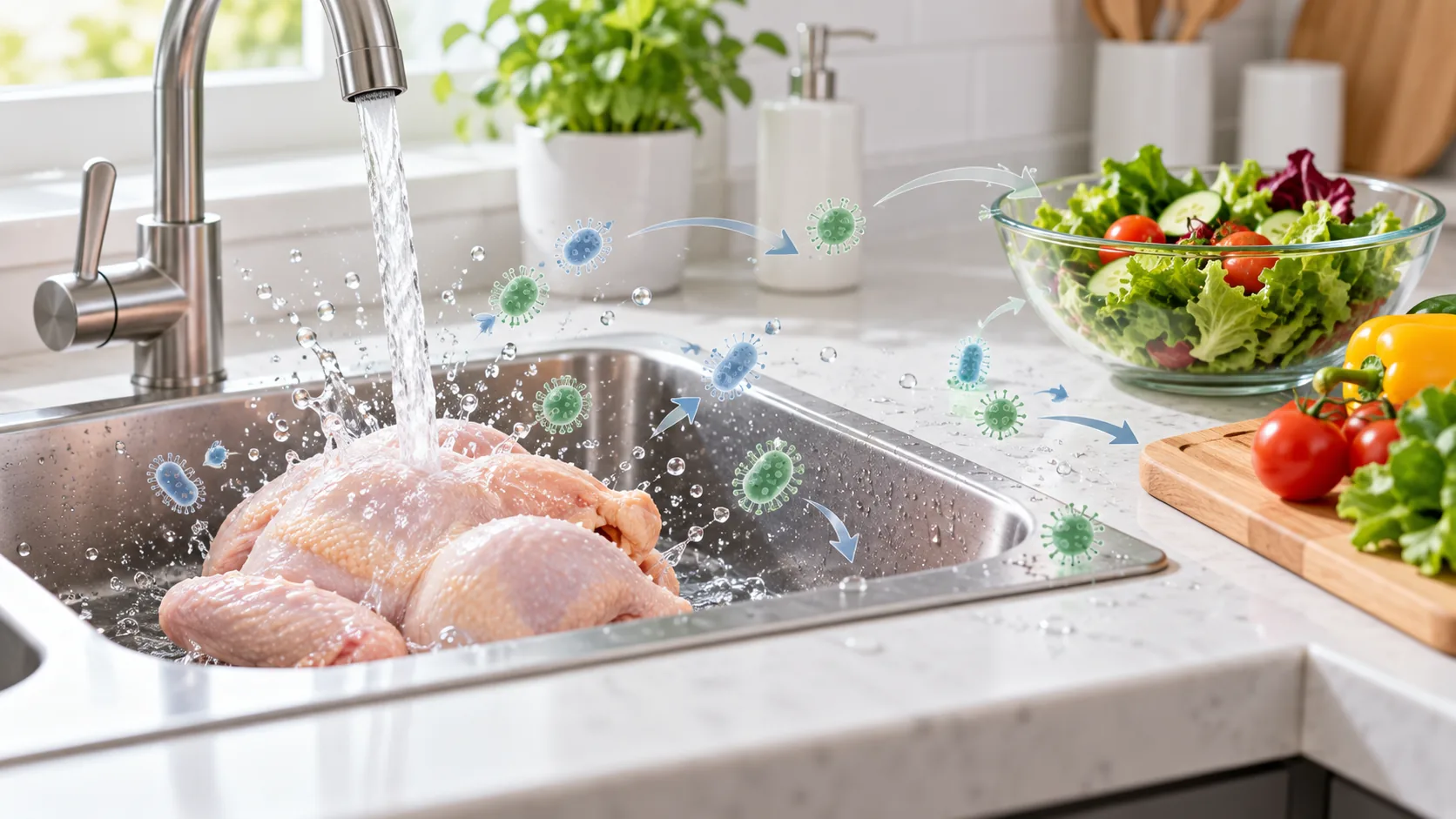
Kitchen studies show that the risk goes beyond splashing. In a USDA experiment, about 60% of participants who washed poultry contaminated their sink, and 26% transferred a harmless tracer bacterium to salad lettuce. Some sinks remained contaminated even after cleaning.
Bacteria can also spread through hands, utensils, packaging, and cutting boards. So even without rinsing, careful handling is still important.
Cooking temperature matters more than washing
For chicken itself, the critical safety step comes at the stove, grill, or oven.
The USDA recommends cooking all poultry to an internal temperature of 165°F (74°C), measured with a food thermometer. For a whole bird, measure the thickest part of the breast and the innermost parts of the thigh and wing.
Color is not a reliable guide. Chicken can sometimes remain pink after reaching a safe temperature, and appearance alone cannot confirm that harmful bacteria have been destroyed.
That is the key difference between washing and cooking. Rinsing only affects the surface and the surrounding sink area, while proper cooking kills harmful bacteria throughout the chicken.
How to handle raw chicken safely
Skipping the rinse is only part of safe chicken preparation. The main goal is to prevent bacteria from spreading to other foods, hands, and kitchen surfaces.
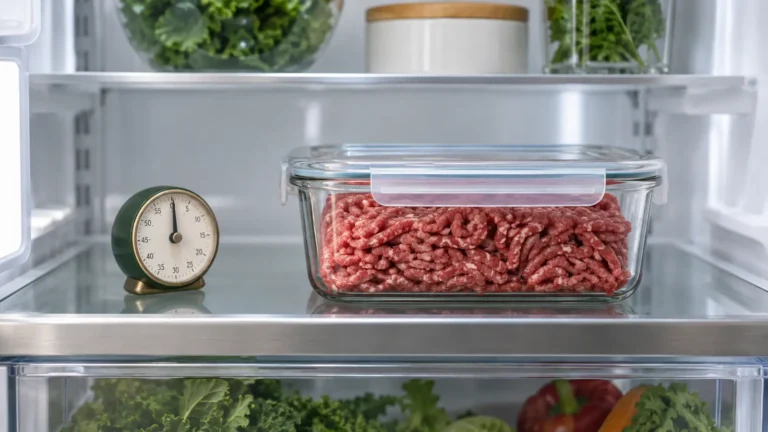
The CDC recommends keeping raw chicken sealed or securely wrapped on the bottom shelf of the refrigerator so its juices cannot leak onto other foods. It also helps to prepare ready-to-eat foods, such as salad, before handling the chicken.
A few simple habits can lower the risk further:
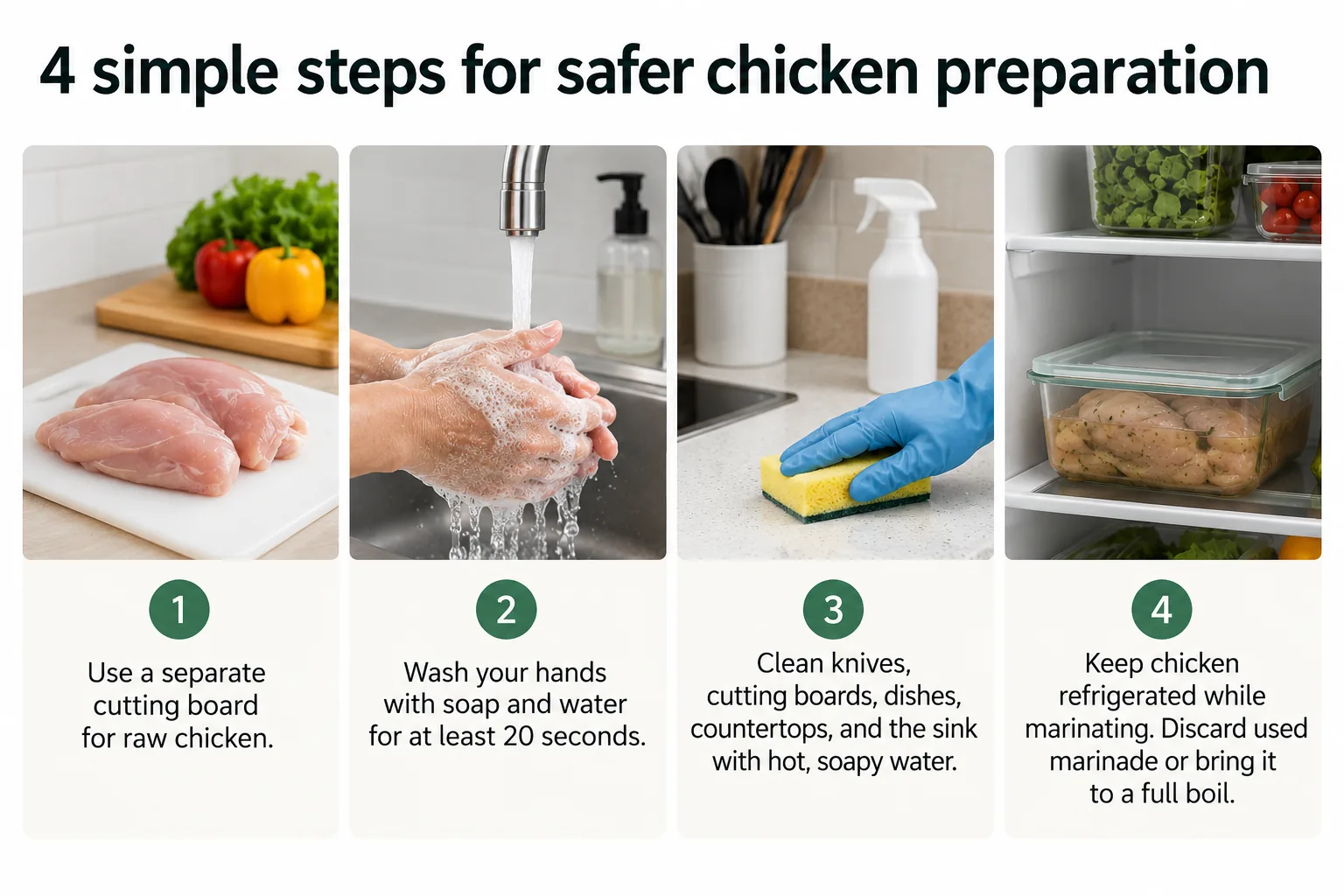
The sink deserves extra attention because it can easily become a source of cross-contamination. After preparing raw chicken, clean any contaminated surfaces first, then sanitize them with a suitable product.
Why the washing raw chicken myth is so persistent
In a 2022 survey of 1,822 U.S. consumers, 73.5% said they washed raw poultry, and about 68% of those did not know the practice was discouraged.
The habit is easy to understand. Washing usually makes things feel cleaner, so rinsing chicken can seem like the hygienic choice.
Research also shows that people wash chicken to remove blood or slime, use vinegar or lemon to kill bacteria, or because they believe their own method avoids cross-contamination.
But chicken is different: it will be cooked, and heat, not washing, is what destroys harmful bacteria.
What if you still want to wash chicken?
Some people wash chicken because of cooking tradition, texture, or visible residue. If the goal is simply to remove excess liquid or moisture, pat the chicken dry with a paper towel instead, then discard it and wash your hands.
If you still choose to wash the chicken, the CDC recommends reducing the risk of splashing. Use a gentle stream of water, then immediately clean and sanitize the sink and surrounding area. Wash your hands with soap and water for at least 20 seconds afterward.
These steps do not make washing safer than skipping the rinse, but they can reduce some of the added risk.
Frequently asked questions
How do you wash chicken the right way?
There isn’t a food-safety version of how to wash chicken, because no rinse removes the bacteria that matter. Pat the chicken dry with paper towels instead, discard them, and wash your hands. If you wash it anyway, use a gentle stream, keep the faucet low, and clean and sanitize the sink afterward.
Does cooking chicken kill bacteria?
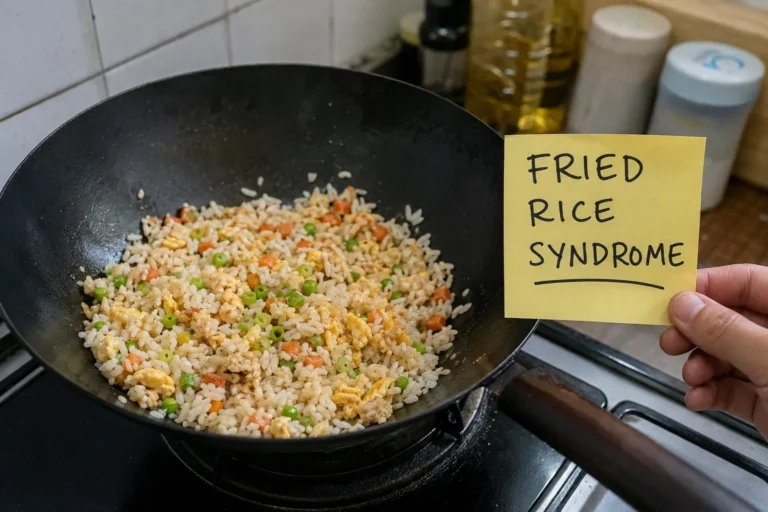
Yes. Cooking chicken to 165°F (74°C) kills Salmonella, Campylobacter, and other common poultry pathogens, which is why washing is unnecessary. What cooking can’t undo is toxin already formed in food left out too long, which is a different issue covered in our fried rice syndrome article.
Should you wash meat before cooking, like steak or pork?
No. The same advice applies to beef, pork, and lamb. Rinsing can spread bacteria, while proper cooking makes the meat safe. Whole cuts should reach 145°F (63°C) plus rest time, while ground beef should reach 160°F (71°C).
Should raw chicken be washed if it’s slimy or smells?
No. If the chicken has slime or packaging liquid, pat it dry with a paper towel. A strong sour, sulfurous, or ammonia-like smell can signal spoilage, which washing cannot fix. In that case, discard the chicken.
Do chefs wash chicken before cooking?
Professional food-safety training follows the same advice as the USDA: do not wash raw poultry. Chefs usually pat chicken dry, which also helps it brown better. If a recipe calls for rinsing off a heavy salt brine, use a gentle stream and clean and sanitize the sink afterward.
The verdict
So, should you wash chicken before cooking? No — washing offers no food-safety benefit and can spread bacteria around the kitchen.
Chicken doesn’t need to be washed to be safe — it needs to be handled carefully while raw and cooked thoroughly. But avoiding the rinse does not prevent every source of cross-contamination. Hands, sinks, utensils, packaging, and prep order can also spread bacteria.
The safer approach is to keep raw chicken separate from ready-to-eat foods, wash your hands and equipment after handling it, clean contaminated surfaces, and cook the chicken to 165°F (74°C) with a food thermometer.
References
- CDC. Chicken and Food Poisoning.
- USDA FSIS. Washing Food: Does it Promote Food Safety?
- USDA. Washing Raw Poultry: Our Science, Your Choice. Press release, 2019.
- USDA. How 26 Percent of Participants Transferred Bacteria from Raw Chicken to Their Salads.
- Shumaker E, Kirchner M, Shelley L, Goulter R, et al. Observational Study of the Impact of a Food Safety Intervention on Consumer Poultry Washing. Journal of Food Protection. 2022;85(4).
- Carmody CD, Mueller RC, Grodner BM, et al. Chickensplash! Exploring the health concerns of washing raw chicken. Physics of Fluids. 2022;34(3):031910.
- Vatral C, Quinlan JJ, et al. Consumer Awareness of the Message Not To Wash Raw Poultry, Current Practices, and Barriers to Following That Message. Journal of Food Protection. 2022.
- Cross-contamination events of Campylobacter spp. in domestic kitchens associated with consumer handling practices of raw poultry. International Journal of Food Microbiology. 2021.
- Identification of barriers to consumers adopting the practice of not washing raw poultry. Food Control. 2021.
- Survival of Salmonella on raw poultry exposed to 10% lemon juice and vinegar washes. Food Control.
- FoodSafety.gov. Safe Minimum Internal Temperatures.
- Quadram Institute / UK Food Standards Agency. Don’t wash raw chicken — Food Safety Week 2014.