
What Are Seed Oils? Are They Bad for You?
Seed oils have become one of nutrition’s most controversial ingredients. Restaurants promote seed-oil-free menus, and snack brands print “cooked in beef tallow” on their bag like a badge of honor.
At the same time, WHO and most nutrition researchers continue to recommend these same oils over animal fats. So what does the evidence actually show?
The short answer first: the central claim that seed oils are “toxic” is not supported by human trials. Research shows that increasing linoleic acid, the omega-6 fat at the center of the seed-oil debate, does not increase inflammatory markers. Higher linoleic acid intake is also generally linked with lower, not higher, rates of heart disease, diabetes, and death.
That does not mean every concern about seed oils is wrong. Repeatedly reheated frying oil deserves genuine caution, and the cardiovascular benefits of increasing omega‑6 fats may be more modest than some public messaging implies.
What are seed oils?
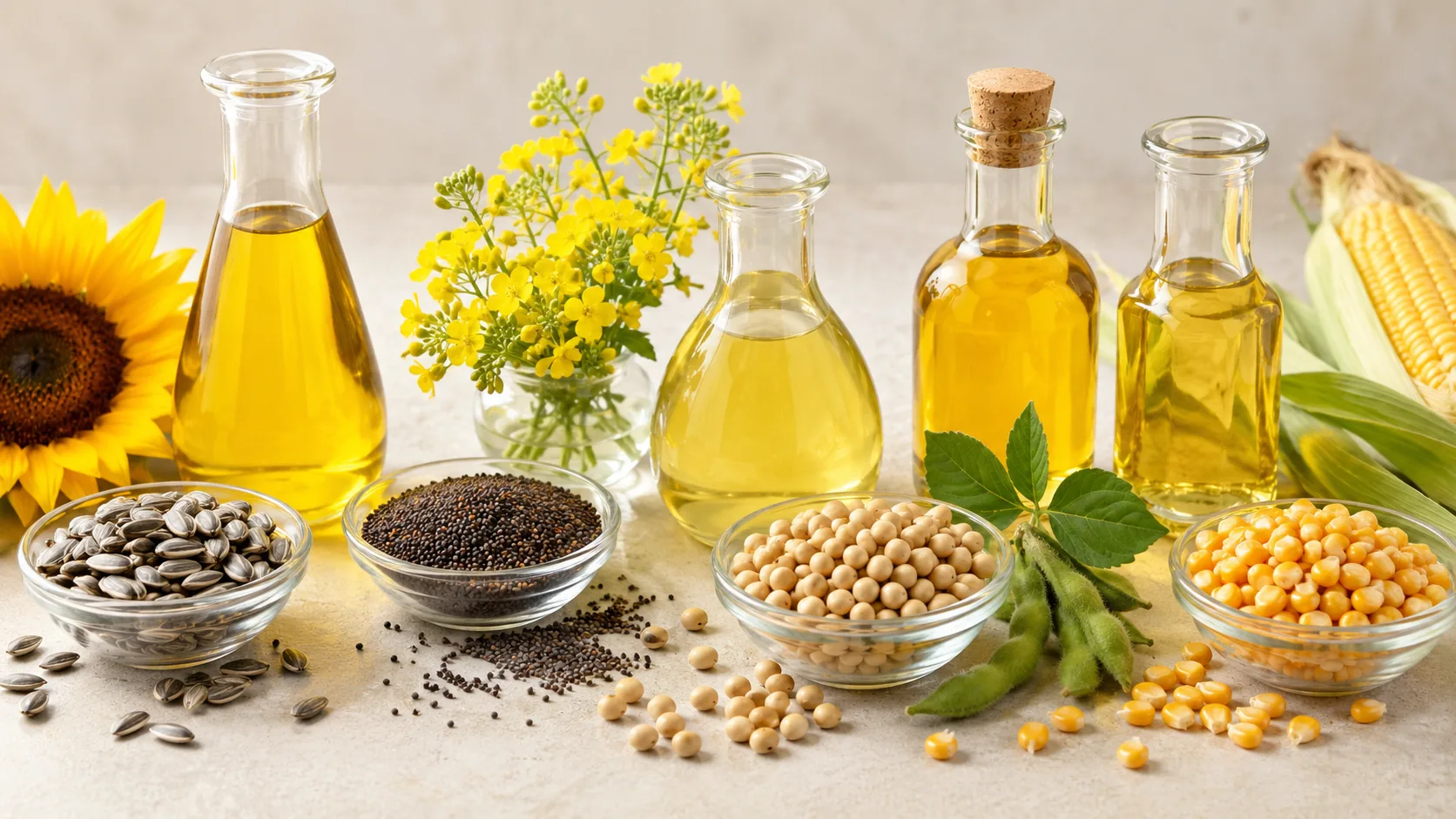
A seed oil is an oil extracted from the seed of a plant rather than from its fruit. Here are the common seed oil examples alongside the non-seed oils they’re often confused with:
| Oil | Seed oil? | Main point |
| Canola (rapeseed), sunflower, soybean, corn, safflower, grapeseed, cottonseed, peanut | Yes | Extracted from the seeds of plants. |
| Olive, avocado, coconut | No | Made from fruit flesh |
| Palm | No | Made from fruit; palm kernel oil comes from the seed |
As for how seed oils are made: most are pressed, solvent-extracted, and refined. The solvent is removed to trace levels during processing, and a 2025 Nutrition Today review found the process stayed within established safety limits. Cold-pressed seed oils skip solvent extraction, but there is no good human evidence that refining itself makes seed oils harmful.
But the term seed oil itself only describes where an oil comes from, not what kind of fat it contains. What matters for health is its fatty acid profile, because that drives how the oil functions in the body:
| Fat type | Common Examples | General effect |
| Saturated fat | Animal fats and some tropical oils | Too much can raise LDL cholesterol |
| Monounsaturated fat | Olive oil, avocado, nuts | Can improve blood cholesterol when replacing saturated fat |
| Polyunsaturated fat | Certain plant oils, nuts, seeds, fatty fish | Includes omega-3 and omega-6 fats and can lower LDL when replacing saturated fat |
Many of the seed oils most often criticized are high in polyunsaturated fat, particularly linoleic acid, the main omega-6 fatty acid in the diet. Critics often focus on eight oils sometimes called the “Hateful Eight”:
canola, corn, cottonseed, soybean, sunflower, safflower, grapeseed, and rice bran oil
Most bottles labeled simply “vegetable oil” contain one of these seed oils or a blend, depending on the product and country.
Other seed oils, such as peanut and sesame seed oil, are often grouped separately because they contain more monounsaturated fat and less linoleic acid.
Seed oils and omega-6: what’s the concern?
Omega-6 fats are not an industrial contaminant — they’re essential nutrients. The body cannot make linoleic acid, so it must come from food, and it’s needed for skin integrity, energy metabolism, and cell membranes.
Omega-3 fats are essential for the same reason. So how did a required nutrient end up accused of poisoning the public?
The strongest argument against seed oils starts with how these fats are processed in the body. Linoleic acid can be converted into arachidonic acid, which is involved in inflammation, while omega-3 fats feed into molecules that help resolve inflammation.
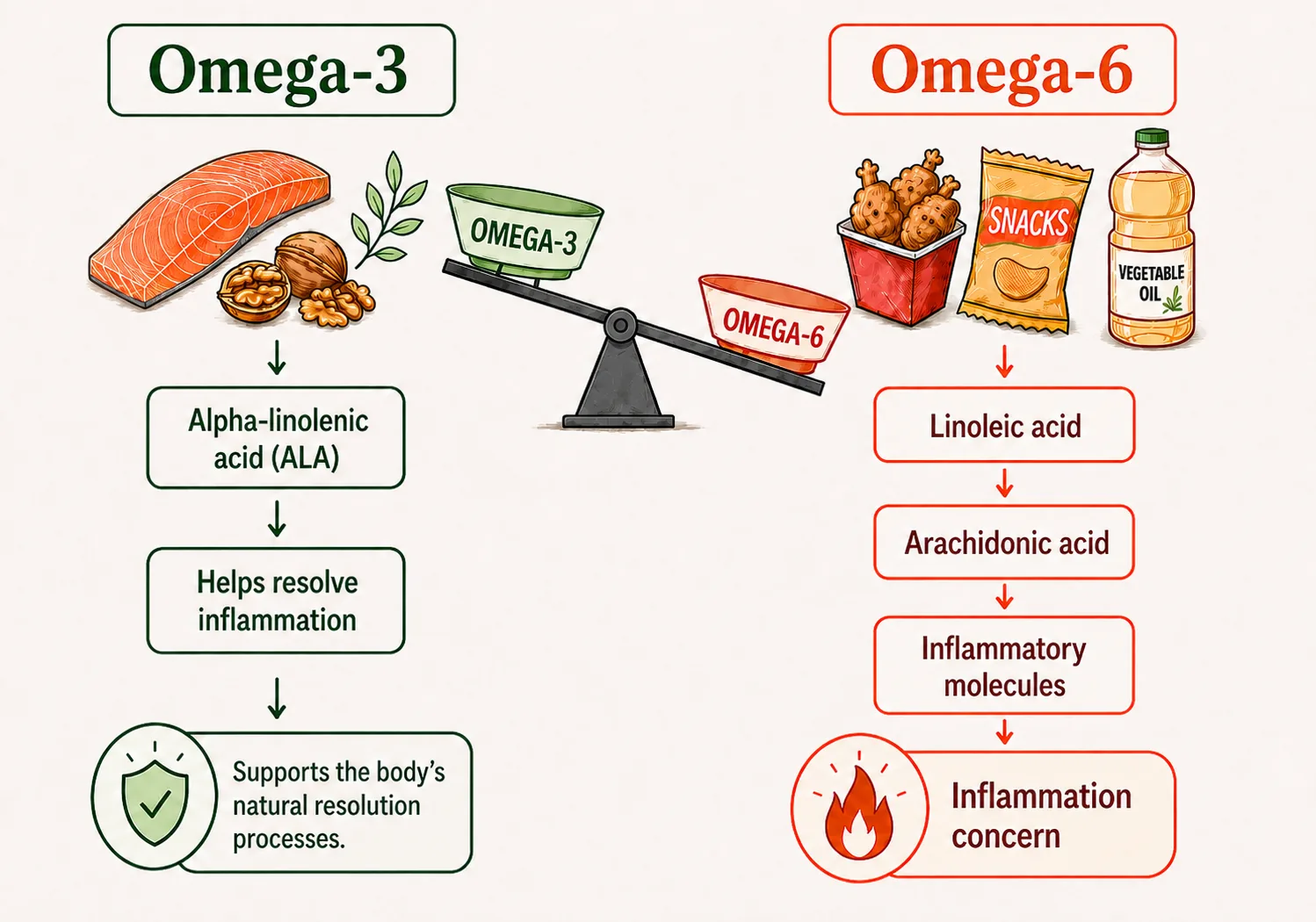
Because intake of foods with seed oils has increased over the past century, omega-6 intake has also risen relative to omega-3. Connect the dots and seed oils become the engine of modern illness.
The mechanism sounds plausible, but human evidence does not show the predicted effect:
- A 2017 meta-analysis found that increasing linoleic acid did not raise inflammatory markers.
- Feeding studies found that even large increases in linoleic acid caused little change in arachidonic acid levels in body tissues.
- A 2025 analysis of nearly 1,900 adults found that higher plasma linoleic acid was associated with lower inflammatory markers, although the findings were preliminary and not yet peer-reviewed.
In other words, the biochemical pathway exists, but the predicted rise in chronic inflammation has not appeared in human trials.
Seed oils, heart disease, and diabetes
If the linoleic acid in seed oils doesn’t raise inflammation, what does that mean for related chronic diseases such as heart disease and type 2 diabetes?
Long-term studies generally point in the same direction:
- A 2025 umbrella review of 150 long-term studies found that higher omega-6 levels were linked to about 11–12% lower overall mortality, along with lower cardiovascular disease and cancer risk.
- A 2017 pooled analysis of nearly 40,000 adults found that higher linoleic acid levels were associated with about a 35% lower risk of type 2 diabetes.
These findings cannot prove cause and effect, but they also do not show the higher disease risk you would expect if linoleic acid were a major driver of chronic disease.
So the evidence does not point to higher disease risk. But that does not necessarily mean increasing omega-6 fats provides a large benefit. A 2018 Cochrane review of 19 trials involving 6,461 adults found that increasing omega-6 fats lowered total cholesterol but had little or no clear effect on deaths or overall cardiovascular events. Two older trials also found no survival benefit.
So far, the evidence does not show that seed oils increase heart disease risk. They can improve cholesterol when replacing saturated fats, but whether that translates into a large reduction in cardiovascular events or deaths is less certain.
The real concern: repeatedly heated seed oils
This is where part of the criticism has a stronger scientific basis.
Polyunsaturated fats react with oxygen and break down more easily, a process called oxidation. When oils rich in these fats are heated for long periods or reused repeatedly, they can form aldehydes and other breakdown products.
Some aldehydes are highly reactive and can damage proteins, DNA, and cell membranes. Oils higher in polyunsaturated fat can also produce more of these compounds when used for long periods of frying than oils higher in monounsaturated fat.
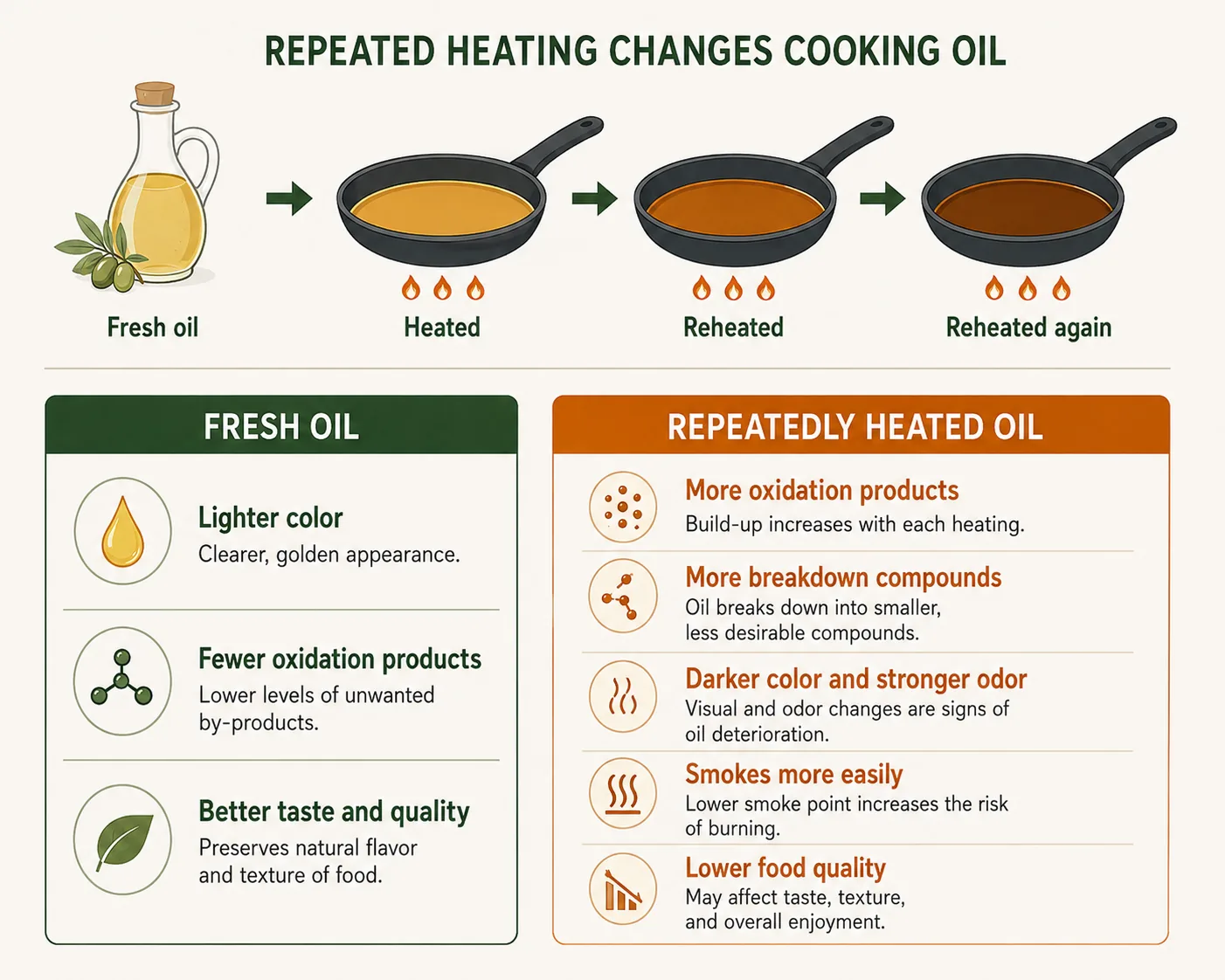
This means the concern is not seed oils themselves, but what can happen when they are heated for long periods or reused repeatedly. Still, evidence linking these breakdown products to disease at typical human exposure levels is limited.
Are seed oils bad for you?
For most people, there is no evidence-based reason to fear ordinary amounts of seed oils. The more useful questions are what type of fat the oil contains, what it is replacing, and how it’s being used.
- Replacing butter or tallow with oils rich in unsaturated fat generally improves LDL cholesterol.
- Repeatedly reusing oil in a deep fryer is a different issue from using fresh oil to sauté vegetables or make a dressing.
The same logic applies when seed oils appear in ultra-processed foods. Their presence doesn’t mean the oil explains the health associations of packaged snacks and fast food, which also tend to be high in calories, salt, and refined carbohydrates.
If you prefer alternatives to seed oils, olive and avocado oil are good choices. They are rich in monounsaturated fat and more heat-stable, so they suit high-temperature cooking. Just don’t switch on the assumption that seed oils were harming you — the evidence doesn’t show that.
Frequently asked questions
Do seed oils cause cancer?
There is no strong human evidence that normal seed-oil consumption increases cancer risk. Concerns largely come from laboratory research on oxidized fats, which cannot by itself show that eating seed oils causes cancer in people.
Is vegetable oil a seed oil?
Sometimes. “Vegetable oil” is a broad label and may contain soybean, canola, sunflower, palm oil, or a blend, depending on the product and country.
Is high-oleic sunflower oil bad for you?
No. High-oleic sunflower oil is rich in oleic acid, the same monounsaturated fat that dominates olive oil, and contains much less linoleic acid than regular sunflower oil. It is also more stable at high temperatures.
Is coconut oil a seed oil?
Coconut oil is made from the white flesh of the coconut, which botanically is part of the seed. However, it is usually discussed separately from the seed oils in the current health debate because it is mostly saturated fat.
Why is seed oil used in infant formula?
Linoleic acid is an essential fatty acid that infants cannot make themselves. Infant formulas therefore contain sources of it, including oils such as sunflower, safflower, or soybean oil.
The verdict
The strongest claims against seed oils do not hold up against human evidence. Increasing linoleic acid has not been shown to raise inflammatory markers, and long-term studies generally associate higher intake with lower, not higher, chronic-disease risk.
That doesn’t make “seed oils are healthy” the full story either — their cardiovascular benefit looks modest in trials, and reheated frying oil deserves more caution than fresh.
But the distinction that matters was never seed versus fruit. It’s what fat the oil contains and what it’s replacing — and on that score, seed oils are mostly innocent of the charges.
Key Sources
1. Hooper L, et al. Omega-6 fats for the primary and secondary prevention of cardiovascular disease. Cochrane Database of Systematic Reviews. 2018.
2. Johnson GH, Fritsche K. Effect of dietary linoleic acid on markers of inflammation in healthy persons. Journal of the Academy of Nutrition and Dietetics. 2012.
3. Su H, et al. Dietary linoleic acid intake and blood inflammatory markers. Food & Function. 2017.
4. Halpert M. Can RFK Jr make America’s diet healthy again? BBC News. 2025.
5. Rett BS, Whelan J. Increasing dietary linoleic acid does not increase tissue arachidonic acid content. Nutrition & Metabolism. 2011.
6. Ramsden CE, et al. Use of dietary linoleic acid for secondary prevention of coronary heart disease and death. BMJ. 2013.
7. Ramsden CE, et al. Re-evaluation of the traditional diet-heart hypothesis: Minnesota Coronary Experiment. BMJ. 2016.
8. Petersen KS, Messina M, Flickinger B. Health implications of linoleic acid and seed oil intake. Nutrition Today. 2025.
9. Grootveld M, et al. Evidence-based challenges to the use of polyunsaturated fatty acid-rich culinary oils for high-temperature frying. Frontiers in Nutrition. 2021.
10. Sadeghi R, Norouzzadeh M, HasanRashedi M, et al. Dietary and circulating omega-6 fatty acids and their impact on cardiovascular disease, cancer risk, and mortality: a global meta-analysis of 150 cohorts and meta-regression. Journal of Translational Medicine. 2025.
11. Wu JHY, Marklund M, Imamura F, et al. Omega-6 fatty acid biomarkers and incident type 2 diabetes: pooled analysis of individual-level data for 39,740 adults from 20 prospective cohort studies. Lancet Diabetes & Endocrinology. 2017.
12. American Society for Nutrition. Plasma linoleic acid and inflammatory biomarkers in ~1,900 adults. NUTRITION 2025 (conference presentation, not peer-reviewed).
13. Jackson KH, Harris WS, Belury MA, Kris-Etherton PM, Calder PC. Beneficial effects of linoleic acid on cardiometabolic health: an update. Lipids in Health and Disease. 2024.