Food Poisoning vs Stomach Bug: How to Tell the Difference
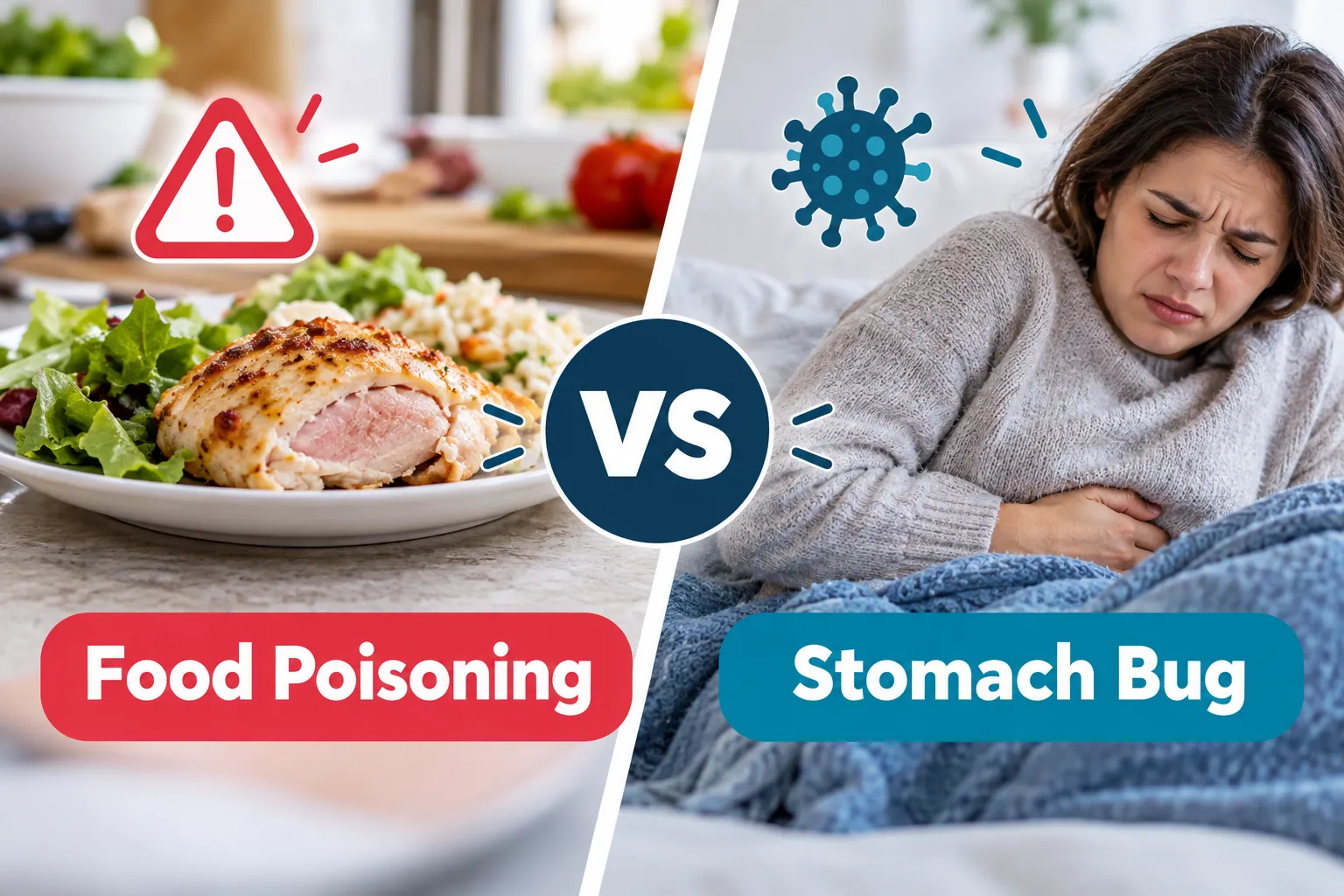
Food poisoning vs stomach bug can be difficult to separate because both may cause sudden vomiting, diarrhea, nausea and cramps. The best clues are what happened before symptoms began, how quickly they started and whether illness follows a shared meal or spreads from person to person.
A very fast reaction after a meal, especially when several diners become sick, can point toward food poisoning. A household or workplace chain of illness can point toward a contagious stomach virus. Neither pattern is conclusive, and severe symptoms deserve medical advice regardless of the suspected cause.
Food poisoning vs stomach bug
The difference between food poisoning and stomach bug is mainly the route of exposure, not a unique set of symptoms. Food poisoning means illness caused by food or drink contaminated with bacteria, viruses, parasites, chemicals or toxins. A stomach bug usually means viral gastroenteritis, most often norovirus in adults. The NIDDK explains the overlap: gastroenteritis acquired from contaminated food or drink is food poisoning, even when a virus caused it.
That is why a simple stomach bug versus food poisoning checklist cannot always name the culprit. Norovirus spreads through sick people and contaminated surfaces, but it can also contaminate food and water. The CDC describes all of these routes.
| Clue | Food Poisoning | Stomach Bug |
| Usual source | Contaminated food or drink | An infected person, surface, food or water |
| Onset | A few hours to several days, depending on the cause | Norovirus commonly starts 12–48 hours after exposure |
| Who gets sick | People who shared a food may become ill | Illness may move through a household, school or workplace |
| Symptoms | Diarrhea, cramps, nausea, vomiting; fever may occur | Watery diarrhea, cramps, nausea, vomiting; sometimes fever |
| Typical course | Hours to days, but some infections last longer | Norovirus usually lasts 1–3 days |
These are clues, not a diagnosis. Norovirus can itself be foodborne, so the categories overlap.
Food poisoning symptoms vs stomach bug
The symptoms of food poisoning vs stomach bug overlap heavily. Both can cause diarrhea, abdominal pain or cramps, nausea, vomiting and sometimes fever. Body aches and headache may occur with norovirus, but they do not rule out foodborne illness. Vomiting alone does not settle the question either.
Some patterns are more informative. According to the CDC food-poisoning symptom guide, bloody diarrhea and fever can occur with infections such as Salmonella or Campylobacter, while severe cramps and bloody diarrhea can occur with some E. coli infections. Those features need medical attention; they are not a safe way to diagnose yourself at home.
Stool odor and noisy digestion are weak clues on their own. Read why poop smells and why your stomach growls for the biology behind those changes, but use the whole symptom and exposure pattern when deciding what to do.
How to tell food poisoning vs stomach bug
If you are asking how to tell difference between food poisoning and stomach bug, work through four questions. They improve the odds of identifying the pattern, but laboratory testing may be needed to confirm a cause.
- Who else is sick?
Illness among people who ate the same dish supports a foodborne source. Illness appearing one after another among family members or coworkers supports a contagious bug. - How soon did it start?
Sudden nausea and vomiting within 30 minutes to 8 hours can fit Staph toxin food poisoning. Other foodborne infections start much later, so the last meal is not always responsible. - What was the exposure?
Undercooked poultry, ground beef, raw shellfish, unpasteurized products, poorly cooled food and known recalls raise concern for foodborne illness. Recent close contact with vomiting or diarrhea raises concern for a virus. - How severe is it?
Blood, high fever, severe pain, dehydration or persistent symptoms matter more than whether you call it a vomiting bug or food poisoning.
A food diary can help. The CDC notes that foodborne symptoms often begin two or three days after exposure and sometimes later. Its food-poisoning reporting advice recommends writing down foods, restaurants, events and animal contact from the week before illness rather than focusing only on the most recent meal.
How long after eating do symptoms start?
Timing can narrow the possibilities, but it cannot cleanly prove food poisoning or a stomach bug. Toxin-mediated food poisoning may begin within hours. The CDC says Staph food poisoning typically starts within 30 minutes to 8 hours and usually lasts 24 hours or less. Clostridium perfringens commonly starts in 6 to 24 hours.
Norovirus usually begins 12 to 48 hours after exposure and lasts 1 to 3 days. Salmonella may start 6 hours to 6 days later, Campylobacter often takes 2 to 5 days, and some E. coli infections commonly take 3 to 4 days. A 24 hour stomach bug or food poisoning is therefore possible, but duration alone does not identify the cause.
The food involved may offer another clue. Improperly cooled rice can allow toxin-producing Bacillus cereus to multiply; the article on fried rice syndrome explains that rapid-onset pattern. For other common risks, see why you should not wash raw chicken and how long ground beef lasts in the fridge.
Is it stomach bug or food poisoning?
You may not be able to know at home. If several people who shared one food become ill at roughly the same time, food poisoning becomes more likely. If the illness moves through close contacts over several days, a contagious virus becomes more likely. But norovirus can produce both patterns because an infected food handler can contaminate a shared meal.
Searches such as food poisoning or gastro bug, gastro bug or food poisoning and food poisoning or stomach virus describe the same practical problem. Focus on hydration, infection control and warning signs while the cause is uncertain. A clinician may use the exposure history plus stool or blood testing when the result would change treatment or help investigate an outbreak.
What to do for vomiting and diarrhea
For a mild food poisoning or the stomach bug, the immediate priority is replacing fluid and electrolytes. Take small, frequent sips if vomiting makes a full glass difficult. The NIDDK treatment guidance says most people with viral gastroenteritis improve without specific medical treatment and can return to their usual diet as appetite returns.
- Use an oral rehydration solution when fluid losses are substantial, especially for children, older adults and people at higher risk of dehydration.
- Do not prepare food for other people while sick. For suspected norovirus, wait at least 48 hours after symptoms stop before handling food or caring for others.
- Wash hands with soap and water. Hand sanitizer is not a substitute because it does not work well against norovirus.
- Do not take anti-diarrheal medicine when you have bloody diarrhea or fever without medical advice, and do not give these medicines to children unless a clinician recommends them.
When to get medical help
Seek medical care for bloody or black stool, diarrhea lasting more than 3 days, a fever above 102°F (38.9°C), repeated vomiting that prevents fluids from staying down, severe abdominal pain or signs of dehydration such as very little urination, dry mouth, dark urine, dizziness or fainting.
Get advice sooner for infants and young children, pregnant people, older adults, anyone with a weakened immune system and people with significant underlying illness. Neurologic symptoms—including blurred or double vision, trouble swallowing, weakness or slurred speech—require urgent emergency assessment because botulism is one possible cause.
Frequently asked questions
What is the main difference between stomach bug and food poisoning?
Food poisoning is acquired from contaminated food or drink. A stomach bug usually means viral gastroenteritis spread through people, surfaces, food or water. The categories overlap because viruses such as norovirus can be foodborne.
Can one person get food poisoning when others do not?
Yes. Contamination may be uneven, portions may differ, and susceptibility varies. Several diners becoming ill strengthens the foodborne clue, but one sick person does not rule food poisoning out.
Does a stomach bug always cause fever?
No. Norovirus may cause a low fever, headache or body aches, but many people mainly have vomiting and watery diarrhea. Food poisoning can occur with or without fever too.
How can you tell food poisoning from a stomach bug for certain?
Often you cannot tell from symptoms alone. A healthcare professional may use your exposure history and, when appropriate, stool or blood tests. Public-health investigators look for clusters linked to the same food or setting.
The verdict
Food poisoning vs stomach bug is less clear-cut than it sounds. Rapid symptoms after a shared meal favor toxin-mediated food poisoning; illness spreading through close contacts favors a viral stomach bug. Yet onset, symptoms and duration overlap, and norovirus can fit both labels.
Use the clues to decide what information to track, not to dismiss severe illness. Replace fluids, avoid spreading infection, report a suspected foodborne cluster and seek care when warning signs appear.
References
- Centers for Disease Control and Prevention. Food Poisoning Symptoms. https://www.cdc.gov/food-safety/signs-symptoms/index.html
- National Institute of Diabetes and Digestive and Kidney Diseases. Symptoms & Causes of Viral Gastroenteritis (Stomach Flu). https://www.niddk.nih.gov/health-information/digestive-diseases/viral-gastroenteritis/symptoms-causes
- Centers for Disease Control and Prevention. About Norovirus. https://www.cdc.gov/norovirus/about/index.html
- Centers for Disease Control and Prevention. How Norovirus Spreads. https://www.cdc.gov/norovirus/causes/index.html
- Centers for Disease Control and Prevention. About Staph Food Poisoning. https://www.cdc.gov/staph-food-poisoning/about/index.html
- Centers for Disease Control and Prevention. What to Do if You Think You Have Food Poisoning. https://www.cdc.gov/foodborne-outbreaks/what-to-do/index.html
- National Institute of Diabetes and Digestive and Kidney Diseases. Treatment of Viral Gastroenteritis (Stomach Flu). https://www.niddk.nih.gov/health-information/digestive-diseases/viral-gastroenteritis/treatment
- Centers for Disease Control and Prevention. How to Prevent Norovirus. https://www.cdc.gov/norovirus/prevention/index.html