Eating During Diarrhea: Foods to Choose and Avoid
Deciding what to eat when you have diarrhea can feel difficult when even a normal meal seems unappealing. Plain rice, toast, bananas, potatoes, and lean protein are reasonable starting points, but there is no single food that reliably stops diarrhea. Replacing lost fluid matters more than finding the perfect meal.
For most adults with short-term diarrhea, eating can resume as appetite returns. A few temporary changes may make meals more comfortable without restricting the diet to crackers and bananas for days.
What to eat when you have diarrhea
Start with small portions of familiar foods. A bland diet can be useful when nausea or cramping makes rich meals difficult, but it does not need to be a strict eating plan. MedlinePlus recommends smaller meals and includes rice, pasta, cooked vegetables, eggs, and lean meats among suitable options.
| Food group | Foods to try |
| Plain starches | White rice, toast, plain pasta, crackers, or potatoes without the skin |
| Fruit | Bananas or a small portion of unsweetened applesauce |
| Protein | Thoroughly cooked eggs, skinless chicken, turkey, or fish prepared with little added fat |
| Cooked vegetables | Soft carrots, peeled zucchini, or green beans |
| Cereal | Plain oatmeal or cream of rice, prepared without heavy cream or large amounts of sugar |
These foods provide energy and, in some cases, protein or potassium. They are options to try, rather than a list everyone must follow. If one food worsens bloating or loose stools, set it aside and try another. Cooking vegetables and removing tough skins can make them easier to tolerate.
Drinks matter as much as food
Watery diarrhea carries water and electrolytes, including sodium, out of the body. Sip fluids regularly; if nausea is present, small, frequent sips may be easier to keep down than a full glass.
For repeated losses or mild to moderate dehydration, clinical guidelines recommend oral rehydration solution. Its glucose and sodium help the intestine absorb water, even during diarrhea. Mix sachets with exactly the amount of water stated on the packet.
When choosing electrolyte drinks for stomach flu, an oral rehydration solution is more suitable for significant losses than relying on soda or juice. Water and broth can help with milder illness, but very sugary drinks may worsen diarrhea. People with kidney disease or prescribed fluid restrictions should ask their clinician about suitable fluids.
Foods and drinks that can make diarrhea worse
Some of the worst foods to eat with diarrhea are ordinary foods that become harder to tolerate during illness. The NIDDK advises limiting alcohol, caffeine, high-fat foods, large amounts of simple sugars, and sugar alcohols. That includes fried meals, rich sauces, sweetened drinks, and sugar-free gum or candies containing ingredients such as sorbitol.
Sugars that are not fully absorbed can retain water in the intestine. This helps explain why more fruit juice is not necessarily better when trying to rehydrate. The NHS also advises avoiding fatty or spicy foods if they aggravate symptoms.
Milk can become troublesome even for someone who usually tolerates it. An intestinal infection can temporarily reduce lactase, the enzyme that digests lactose. Undigested lactose reaches the colon, where bacterial breakdown contributes to gas and extra fluid.
If dairy makes symptoms worse, lactose-free products are an alternative. Yogurt may be easier to tolerate than milk for some people because it generally contains less lactose, as NIDDK guidance explains. That does not make yogurt a necessary treatment for diarrhea.
Where the BRAT diet fits
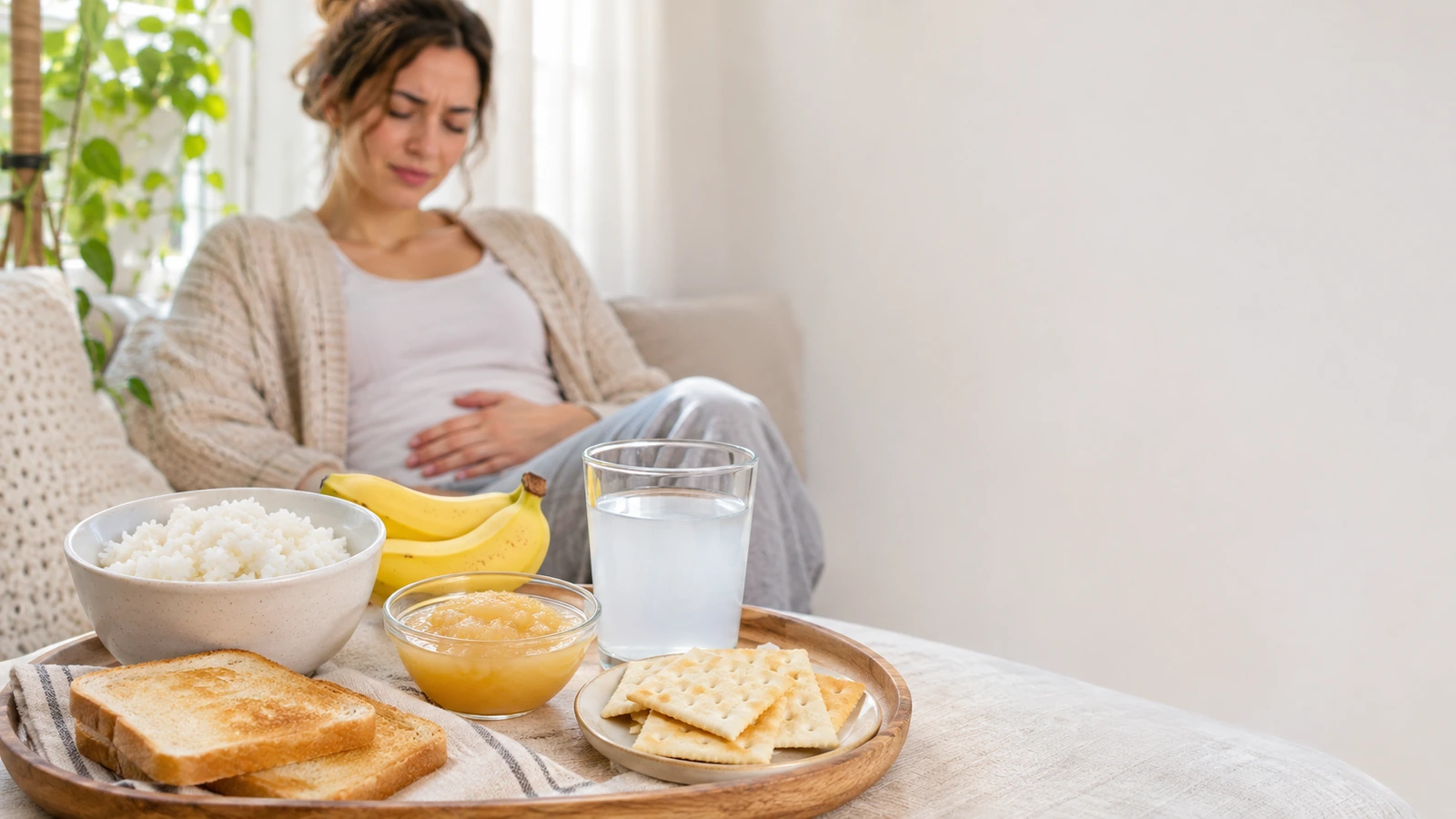
The BRAT diet means bananas, rice, applesauce, and toast. These bland foods can be manageable when appetite is poor, but eating only those four foods leaves little variety or protein.
Using a BRAT diet for diarrhea is therefore best understood as choosing a few tolerable foods, rather than following a cure. Published infectious-diarrhea guidelines note limited supporting evidence for the BRAT diet and recommend returning to a usual, age-appropriate diet during or after rehydration. Fasting for a day is generally unnecessary.
Returning to normal meals
As appetite improves, add foods back according to tolerance. There is no need to wait for every bowel movement to become normal before eating more broadly. The NIDDK recommends resuming the normal diet when appetite returns, while avoiding foods that worsen symptoms.
Choosing what to eat when you have diarrhea also depends on the cause. Infections, medicines, and food intolerances can all be responsible. If illness followed a meal or is spreading through a household, these clues that help distinguish food poisoning from a stomach bug may be useful. Diet can support recovery, but cannot identify or treat every cause.
When food changes are not enough
Seek prompt medical advice for blood in stool, black tarry stools, severe abdominal pain, high fever, frequent vomiting, or dehydration. Little urine, a dry mouth, and dizziness are warning signs. NIDDK advises adults to contact a doctor if diarrhea lasts more than two days or there are six or more loose stools daily.
Pregnant people, adults over 65, people taking antibiotics, and those with weakened immune systems should seek advice sooner. Infants and children need age-specific guidance; continue breast milk or usual-strength formula rather than applying an adult bland diet.
References
- NIDDK. Eating, Diet, & Nutrition for Diarrhea. https://www.niddk.nih.gov/health-information/digestive-diseases/diarrhea/eating-diet-nutrition
- MedlinePlus. When you have diarrhea. https://medlineplus.gov/ency/patientinstructions/000121.htm
- Shane AL, Mody RK, Crump JA, et al. 2017 IDSA clinical practice guidelines for the diagnosis and management of infectious diarrhea. Clinical Infectious Diseases. 2017;65(12):e45–e80. https://doi.org/10.1093/cid/cix669
- NHS. Diarrhoea and vomiting. https://www.nhs.uk/symptoms/diarrhoea-and-vomiting/
- NIDDK. Treatment of Diarrhea. https://www.niddk.nih.gov/health-information/digestive-diseases/diarrhea/treatment
- NIDDK. Symptoms & Causes of Lactose Intolerance. https://www.niddk.nih.gov/health-information/digestive-diseases/lactose-intolerance/symptoms-causes
- NIDDK. Eating, Diet, & Nutrition for Lactose Intolerance. https://www.niddk.nih.gov/health-information/digestive-diseases/lactose-intolerance/eating-diet-nutrition
- NIDDK. Symptoms & Causes of Diarrhea. https://www.niddk.nih.gov/health-information/digestive-diseases/diarrhea/symptoms-causes