Food Poisoning or Stomach Bug? Three Clues That Help
Ever experienced sudden nausea, vomiting, or diarrhea and wondered whether something you ate or a stomach virus was to blame? Food poisoning vs stomach bug can be difficult to tell apart because both cause similar symptoms, including abdominal cramps.
How quickly symptoms appear, what you ate, and whether others around you are sick can help distinguish food poisoning from a contagious stomach bug. However, these clues are not always reliable, so knowing the differences can also help you decide when to seek medical care.
Food poisoning vs stomach bug
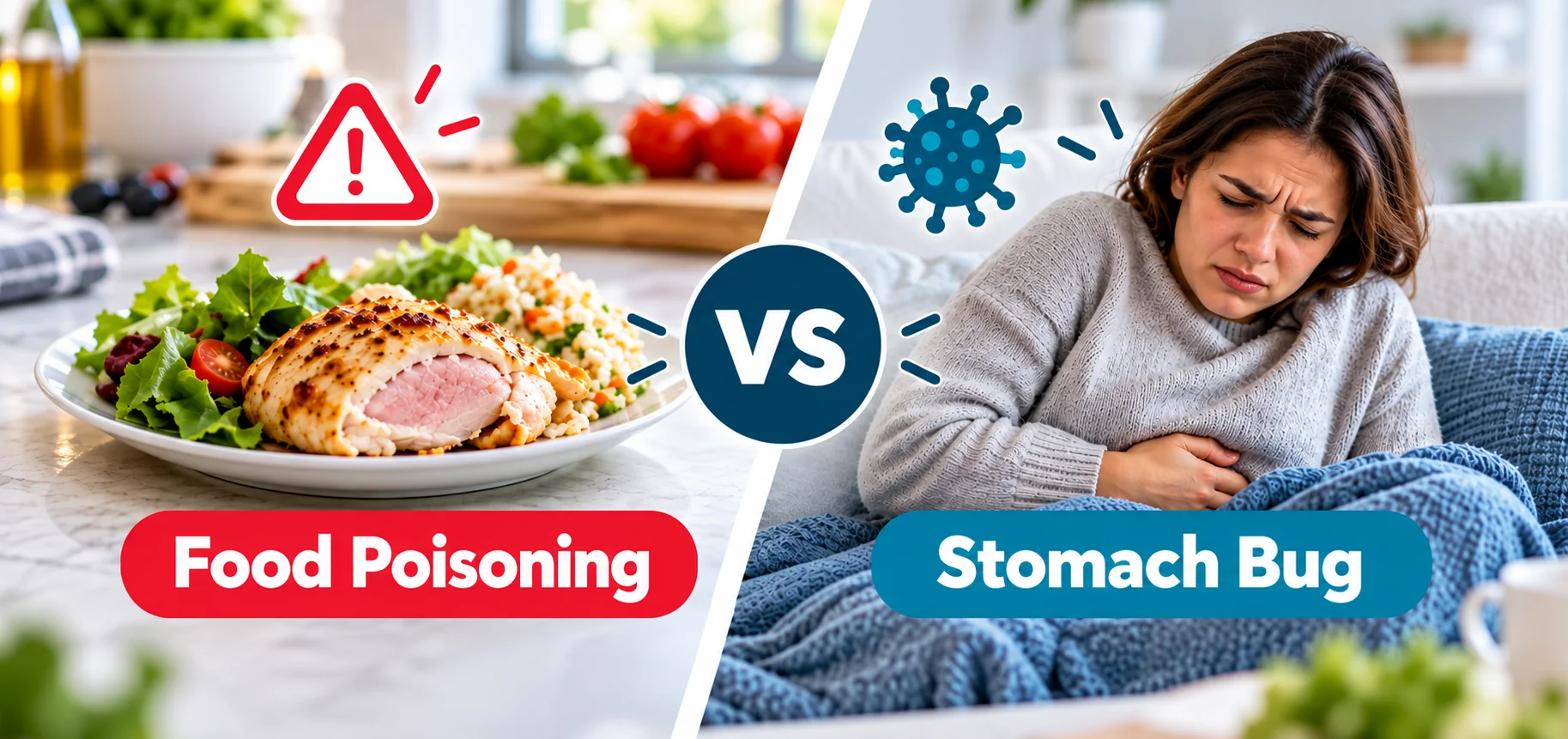
Food poisoning is an illness caused by consuming food or drinks contaminated with harmful bacteria, viruses, parasites, chemicals, or toxins. A stomach bug, on the other hand, usually refers to viral gastroenteritis — an infection of the stomach and intestines, most often caused by norovirus in adults.
The main difference is that food poisoning describes how an illness is acquired, while a stomach bug describes the infection itself. However, they can overlap because viruses like norovirus can spread through contaminated food or drinks, causing both food poisoning and a stomach bug.
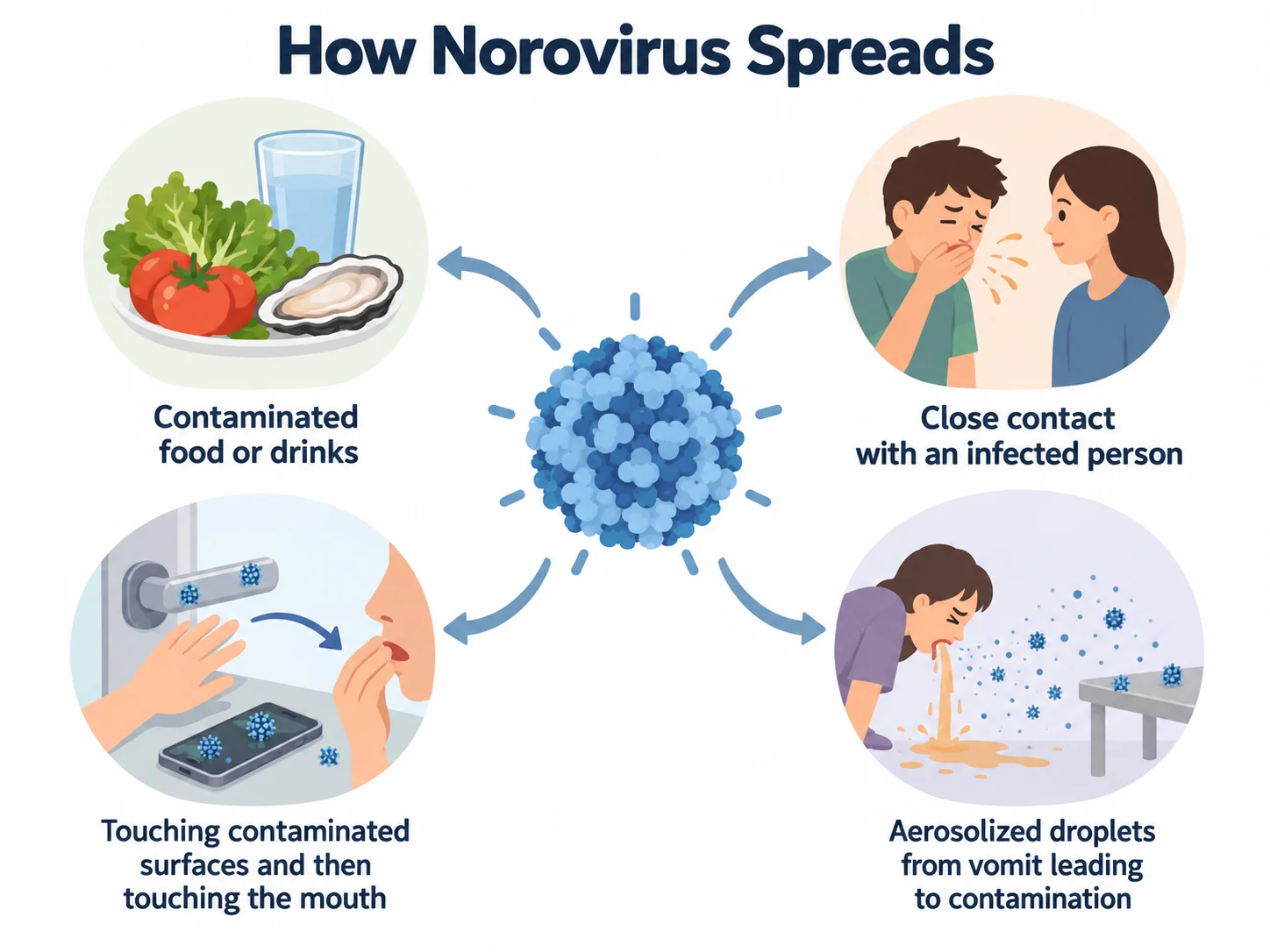
The table below compares their typical sources, symptoms, onset, and duration.
| Clue | Food Poisoning | Stomach Bug |
| Usual source | Contaminated food or drink | An infected person, contaminated surface, food, or water |
| Onset | A few hours to several days, depending on the cause | Norovirus commonly starts 12–48 hours after exposure |
| Who gets sick | People who shared a food may become ill | Illness may move through a household, school or workplace |
These differences are general patterns and cannot confirm the cause of illness, especially since some infections can spread in multiple ways.
Symptoms of food poisoning vs stomach bug
Comparing symptoms may seem like the easiest way to tell food poisoning from a stomach bug, but both cause many of the same symptoms, making it difficult to tell which one is responsible.
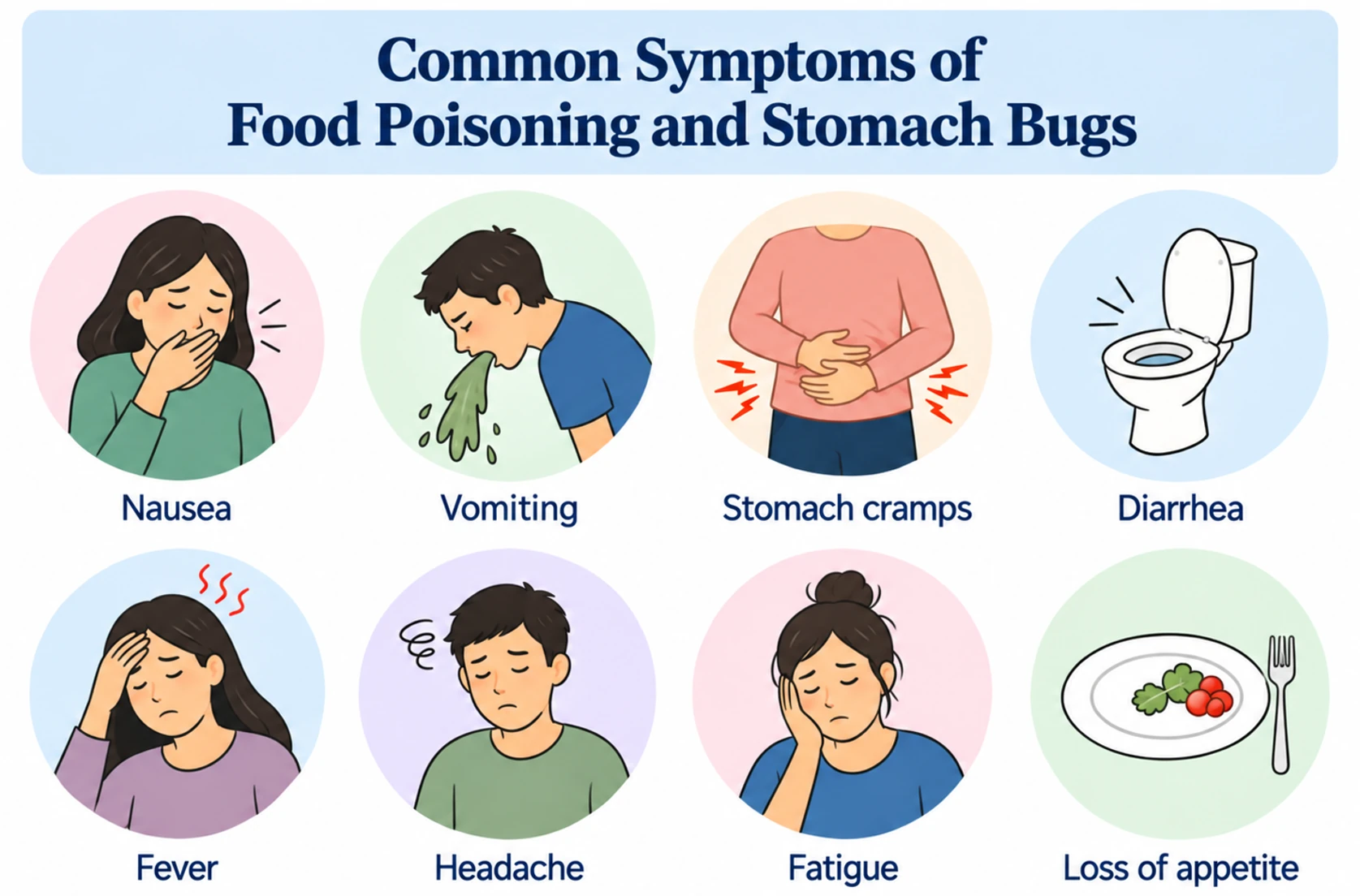
While these changes reveal little about the cause, other symptoms may signal a more serious infection. According to the CDC, Salmonella and Campylobacter infections can cause fever and bloody diarrhea, while certain E. coli infections may cause severe abdominal cramps and bloody diarrhea. These warning signs require medical attention, regardless of the suspected cause.
How long after eating do symptoms start?
Symptoms of food poisoning and stomach bugs don’t always appear immediately after exposure. Depending on the cause, they may develop within hours or take several days. The table below shows typical incubation periods for common causes, based on CDC data.
| Cause | When symptoms usually start |
| Staph food poisoning | 30 minutes–8 hours |
| Clostridium perfringens | 6–24 hours |
| Norovirus | 12–48 hours |
| Salmonella | 6 hours–6 days |
| Campylobacter | 2–5 days |
| Certain E. coli infections | 3–4 days |
Because these timeframes overlap, timing alone cannot confirm the cause. Illness that develops several days after exposure may also be linked to an earlier meal rather than the most recent one.
How can you tell food poisoning from a stomach bug?
Symptoms alone usually cannot distinguish food poisoning from a stomach bug, and even testing may not reveal how the infection was acquired. However, three practical questions can help narrow down the likely cause:
Who else is sick?
If several people become ill after sharing a meal, food poisoning is more likely. If symptoms spread through a household or workplace over several days, a contagious stomach bug may be responsible.
How soon did symptoms start?
Symptoms that appear within a few hours may suggest toxin-related food poisoning, while other foodborne infections can take several days to develop.
What were you exposed to?
Undercooked meat, raw shellfish, or improperly stored food may suggest food poisoning, while recent contact with someone who is sick may point to a contagious stomach bug. For example, improperly cooled rice can cause fried rice syndrome.
Keeping a food diary and noting recent exposures may also help identify the cause. The CDC recommends recording foods eaten, restaurants visited, gatherings attended, and animal contact during the week before symptoms began.
What to do for vomiting and diarrhea
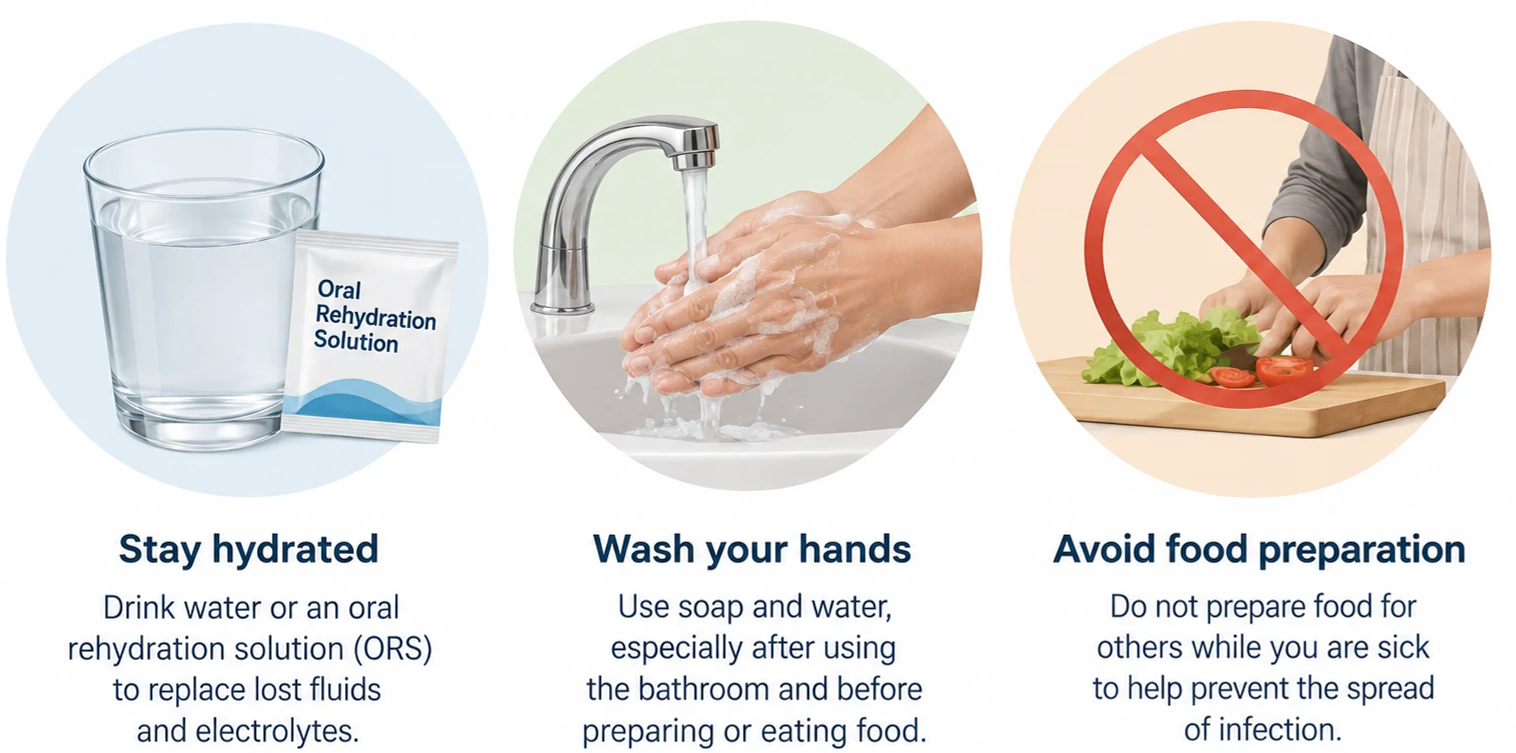
Whether you have food poisoning or a stomach bug, replacing lost fluids and electrolytes is essential to prevent dehydration. According to the NIDDK, most people with a viral stomach bug recover without specific treatment and can resume their normal diet as appetite returns. Take small, frequent sips if vomiting makes drinking difficult.
To support recovery and prevent infection from spreading:
When to get medical help
While home care is often enough, some symptoms may indicate a more serious infection or dehydration. Seek medical attention if you experience:
- Bloody or black stools
- Diarrhea lasting more than three days
- Fever above 102°F (38.9°C)
- Frequent vomiting that prevents you from keeping fluids down
- Severe abdominal pain
- Signs of dehydration, such as dark urine, reduced urination, dry mouth, dizziness, or fainting
Medical advice may be needed sooner for people at higher risk of complications, including infants, young children, pregnant people, older adults, and those with weakened immune systems or significant underlying conditions. Some symptoms require even more urgent attention. Seek emergency care immediately if you experience blurred or double vision, difficulty swallowing, muscle weakness, or slurred speech, as these may indicate a serious condition such as botulism.
Frequently asked questions
What is the main difference between stomach bug and food poisoning?
Food poisoning comes from contaminated food or drinks, while a stomach bug usually spreads through people or surfaces. They can overlap because viruses like norovirus can spread in both ways.
Is food poisoning contagious?
It depends on the cause. Norovirus and certain foodborne bacterial infections can spread between people, while poisoning from preformed bacterial toxins, such as Staph food poisoning, is not directly contagious.
Can one person get food poisoning when others do not?
Yes. Some portions may contain more germs than others, and people may react differently to the same food. If several people become sick after sharing a meal, food poisoning is more likely, but it can also affect just one person.
Does a stomach bug always cause fever?
No. Norovirus may cause a mild fever, headache, or body aches, but vomiting and watery diarrhea are often the main symptoms. Food poisoning can also occur with or without fever.
Do you need a stool test to know which one you have?
Usually not. Most mild cases resolve without testing. However, a healthcare professional may recommend stool or other tests for bloody diarrhea, high fever, severe or prolonged symptoms, or a suspected outbreak. Testing can identify certain pathogens but may not establish how the infection was acquired.
The verdict
Food poisoning vs stomach bug isn’t always easy to distinguish because both share many symptoms and may even have the same cause. Symptom timing, recent exposures, and whether others become sick can provide clues, but none can confirm the cause on their own.
Regardless of the cause, staying hydrated, practicing good hygiene, and recognizing warning signs are essential for a safe recovery.
References
- Centers for Disease Control and Prevention. Food Poisoning Symptoms. https://www.cdc.gov/food-safety/signs-symptoms/index.html
- National Institute of Diabetes and Digestive and Kidney Diseases. Symptoms & Causes of Viral Gastroenteritis (Stomach Flu). https://www.niddk.nih.gov/health-information/digestive-diseases/viral-gastroenteritis/symptoms-causes
- Centers for Disease Control and Prevention. About Norovirus. https://www.cdc.gov/norovirus/about/index.html
- Centers for Disease Control and Prevention. How Norovirus Spreads. https://www.cdc.gov/norovirus/causes/index.html
- Centers for Disease Control and Prevention. About Staph Food Poisoning. https://www.cdc.gov/staph-food-poisoning/about/index.html
- Centers for Disease Control and Prevention. What to Do if You Think You Have Food Poisoning. https://www.cdc.gov/foodborne-outbreaks/what-to-do/index.html
- National Institute of Diabetes and Digestive and Kidney Diseases. Treatment of Viral Gastroenteritis (Stomach Flu). https://www.niddk.nih.gov/health-information/digestive-diseases/viral-gastroenteritis/treatment
- Centers for Disease Control and Prevention. How to Prevent Norovirus. https://www.cdc.gov/norovirus/prevention/index.html