The Science of Gluten in Food and the Body
Gluten has become one of the most debated components of modern diets. Gluten-free products fill supermarket shelves, and avoiding gluten is often promoted as a healthier choice. Yet these same proteins give bread its characteristic stretch and chewy texture, and most people can consume them without problems.
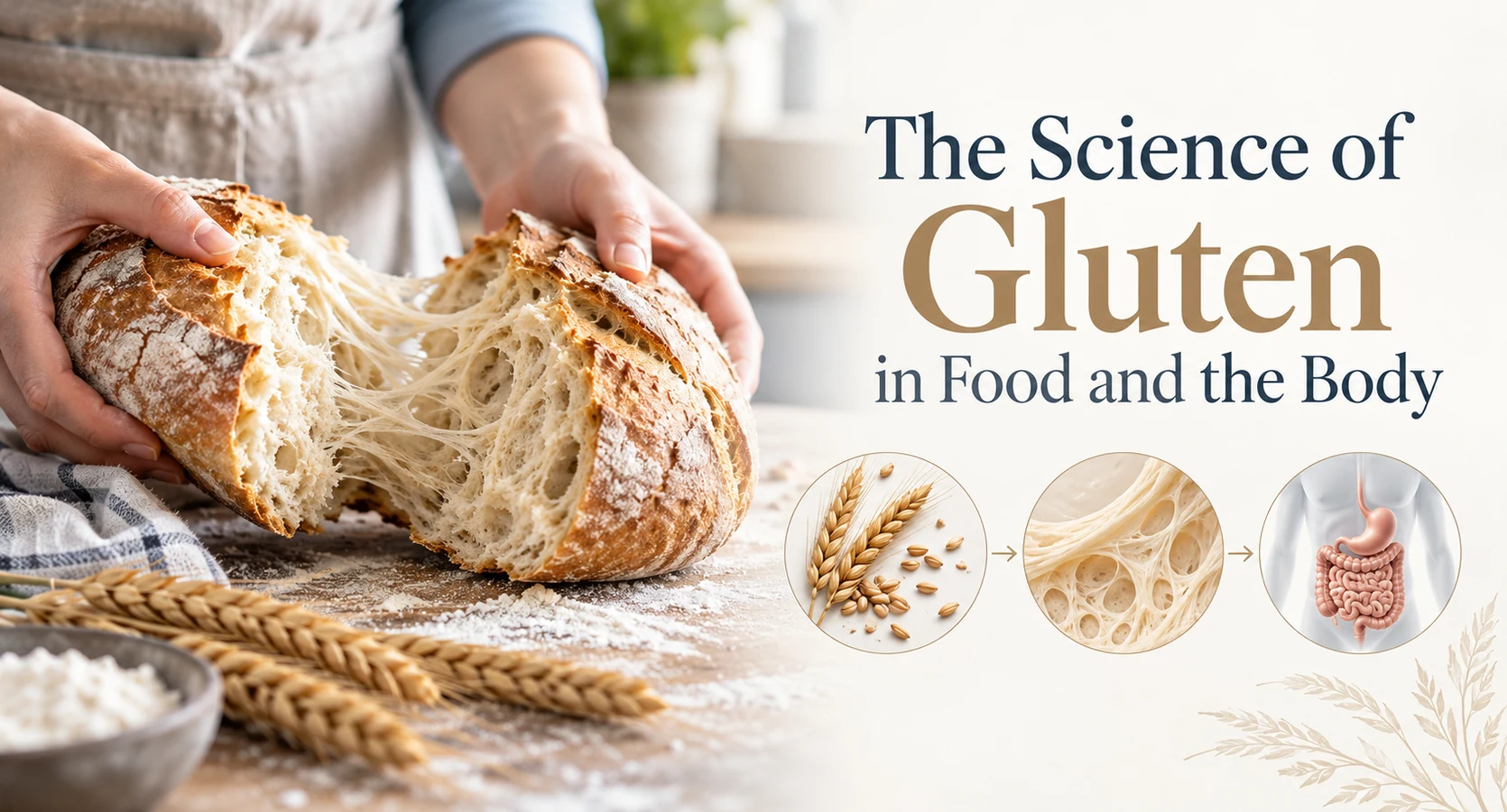
So, what is gluten, and why does it affect people differently? Gluten is a group of proteins naturally found in wheat, barley, rye, and related grains. Its unique properties make it valuable in food production, but certain digestive and immune conditions can make it problematic. Understanding both its role in food and its effects on the body helps explain the science behind the gluten-free debate.
What is gluten?
Gluten refers to a group of related storage proteins found in certain cereal grains. In wheat, the two main types are gliadin and glutenin, which contribute different properties to dough:
- Gliadin allows dough to stretch and flow without breaking easily.
- Glutenin provides elasticity and strength, helping dough return toward its original shape after stretching.
Together, these proteins form a flexible network when wheat flour is mixed with water and kneaded. Related proteins, including hordeins in barley and secalins in rye, are also considered gluten in dietary and medical contexts.
According to a review published in Cereal Chemistry, the balance and interactions between gluten proteins largely determine the handling properties of wheat dough.
The role of gluten in baking
Gluten plays an important structural role in bread and other baked foods. When wheat flour absorbs water, gliadin and glutenin interact to form a network. Kneading strengthens this network through protein interactions, including hydrogen bonds and disulfide bonds.
During fermentation, yeast produces carbon dioxide that becomes trapped within the dough. The gluten network stretches around these gas bubbles, allowing the dough to expand while maintaining its structure.
This explains why wheat bread typically has an airy, chewy texture, whereas gluten-free bread often requires additional ingredients to achieve similar results.
The amount and quality of gluten-forming proteins also affect baking performance. Bread flour generally contains more protein than cake flour, producing stronger dough. However, protein content is different from flour freshness, which is covered in our guide to what happens when flour expires.
What foods contain gluten?
Gluten occurs naturally in wheat, barley, rye, and related grains. Because these grains are widely used in food production, gluten appears in many everyday foods, including some where its presence is less obvious.
| Source | Common foods containing gluten |
| Wheat, including spelt, durum, and semolina | Bread, pasta, cakes, biscuits, and couscous |
| Barley | Malt, malt-flavored products, and some cereals |
| Rye | Rye bread, crackers, and certain cereals |
| Triticale (wheat–rye hybrid) | Some breads and grain products |
| Wheat-based ingredients | Some soy sauces, soups, dressings, and processed foods |
Many foods are naturally gluten-free, including rice, corn, quinoa, potatoes, eggs, milk, meat, fruits, and vegetables. However, gluten can enter these foods through cross-contact during processing, preparation, or packaging.
Oats are a notable example. Although they do not naturally contain wheat, barley, or rye gluten, they can become contaminated during production. Most people with celiac disease tolerate uncontaminated oats, although some react to avenin, a related oat protein.
A gluten-free diet excludes gluten-containing grains and products made with them, unless they have been appropriately processed to meet gluten-free standards. In the United States, foods labeled gluten-free must generally contain less than 20 parts per million (ppm) of unavoidable gluten and meet additional ingredient restrictions. Labeling standards differ between countries.
Gluten-free alternatives often use rice flour, corn flour, or potato starch. However, removing gluten does not automatically make a food healthier. Some processed gluten-free products contain less fiber or different amounts of added sugar and fat than their conventional counterparts.
How does gluten affect the body?
Like other dietary proteins, gluten is broken down by digestive enzymes in the stomach and small intestine. However, gluten proteins contain high amounts of certain amino acids, particularly proline and glutamine, making some peptide sequences resistant to complete digestion.
For most people, these remaining fragments cause no harm. In susceptible individuals, however, gluten or other wheat proteins can trigger different reactions.
| Condition | What happens | Common symptoms |
| Celiac disease | An autoimmune response to gluten damages the small intestine. | Diarrhea, bloating, abdominal pain, fatigue, and nutrient deficiencies |
| Wheat allergy | An allergic reaction occurs against wheat proteins, which may include gluten. | Hives, swelling, digestive symptoms, or breathing difficulties |
| Non-celiac gluten/wheat sensitivity | Symptoms occur after eating gluten-containing foods without confirmed celiac disease or wheat allergy. | Bloating, abdominal discomfort, diarrhea, fatigue, or headache |
Celiac disease is an autoimmune disorder in which gluten triggers damage to the intestinal villi, the tiny projections responsible for increasing the surface area for nutrient absorption. Untreated disease can lead to nutrient deficiencies, anemia, osteoporosis, and poor growth in children. Strict lifelong gluten avoidance is necessary, but testing should take place before starting a gluten-free diet because removing gluten can affect diagnostic results.
Wheat allergy involves an allergic response to wheat proteins rather than the autoimmune intestinal damage seen in celiac disease. Reactions can range from mild symptoms to potentially life-threatening anaphylaxis.
Non-celiac gluten/wheat sensitivity is less clearly understood. Some people experience digestive or other symptoms after eating wheat-containing foods despite testing negative for celiac disease and wheat allergy. However, gluten may not always be responsible. Wheat also contains fructans, fermentable carbohydrates that can trigger digestive symptoms in people sensitive to FODMAPs, as Monash University explains.
For people without gluten-related disorders, there is generally no medical reason to eliminate gluten. Overall nutritional quality matters more than whether a diet contains gluten.
Frequently asked questions
Is gluten bad for you?
For most people, gluten is safe to consume. It becomes a concern for individuals with celiac disease, wheat allergy, or certain wheat-related sensitivities. There is no convincing evidence that everyone benefits from avoiding gluten.
Does rice have gluten?
No. Plain rice is naturally gluten-free, including white, brown, and wild rice. However, rice dishes may contain gluten through added sauces, seasonings, or cross-contact during preparation.
Do oats have gluten?
Pure oats do not contain wheat, barley, or rye gluten, but they contain a related protein called avenin. Oats may also be cross-contaminated during processing; gluten-free labeling rules for oats vary by country.
Is gluten the same as wheat?
No. Wheat is a cereal grain containing starch, protein, fiber, and other nutrients. Gluten is a group of proteins found in wheat and certain other grains.
What is gluten sensitivity?
Non-celiac gluten/wheat sensitivity refers to symptoms associated with eating gluten-containing foods when celiac disease and wheat allergy have been excluded. The exact triggers remain uncertain.
Does cooking destroy gluten?
No. Cooking changes the structure of gluten proteins but does not reliably eliminate the peptide sequences responsible for reactions in celiac disease. Baking wheat bread therefore does not make it gluten-free.
The verdict
Gluten is a group of proteins responsible for many of the characteristic textures of wheat-based foods. Its ability to form an elastic network makes it particularly useful in baking, allowing dough to stretch, trap gas, and maintain its structure.
For most people, gluten is a normal and safe component of the diet. However, people with celiac disease must avoid it, while those experiencing suspected gluten-related symptoms should seek appropriate evaluation before making major dietary changes.
Understanding the difference between gluten’s role in food and its effects on the body helps separate established science from common misconceptions surrounding gluten-free diets.
References
- Wieser H. Chemistry of Wheat Gluten Proteins: Qualitative Composition. Cereal Chemistry. https://onlinelibrary.wiley.com/doi/10.1002/cche.10572
- American Society of Baking. Gluten Quality. https://asbe.org/article/gluten-quality/
- National Institute of Diabetes and Digestive and Kidney Diseases. Eating, Diet, & Nutrition for Celiac Disease. https://www.niddk.nih.gov/health-information/digestive-diseases/celiac-disease/eating-diet-nutrition
- National Institute of Diabetes and Digestive and Kidney Diseases. Diagnosis of Celiac Disease. https://www.niddk.nih.gov/health-information/digestive-diseases/celiac-disease/diagnosis
- Health Canada. Gluten — A Group of Proteins That People With Gluten-Related Disorders Should Avoid. https://www.canada.ca/en/health-canada/services/food-nutrition/reports-publications/food-safety/gluten-pamphlet.html
- U.S. Food and Drug Administration. Questions and Answers on the Gluten-Free Food Labeling Final Rule. https://www.fda.gov/food/nutrition-food-labeling-and-critical-foods/questions-and-answers-gluten-free-food-labeling-final-rule
- Monash University. FODMAP Frequently Asked Questions. https://www.monashfodmap.com/about-fodmap-and-ibs/frequently-asked-questions/
- Celiac Disease Foundation. What Is Gluten? https://celiac.org/what-is-gluten/
- Celiac Disease Foundation. Sources of Gluten. https://celiac.org/what-is-gluten/sources-of-gluten/
- National Institute of Diabetes and Digestive and Kidney Diseases. Symptoms & Causes of Celiac Disease. https://www.niddk.nih.gov/health-information/digestive-diseases/celiac-disease/symptoms-causes
- American College of Allergy, Asthma & Immunology. Wheat & Gluten Allergy. https://acaai.org/allergies/allergic-conditions/food/wheat-gluten/